
Introduction: Asset management and optimisation are no longer straightforward tasks in the fast-paced commercial world of today. Keeping control over each asset’s lifecycle is essential, whether you’re working with IT infrastructure, machinery, equipment, or even intangible assets like software. Software for asset management is useful in this situation. This article will go over the definition of asset management software, the elements that must be included, and how ALM may improve the efficiency of the vehicle production line. Along with how maintenance expenses can be lowered by up to 33% and downtime can be decreased by up to 23%.
What Is Asset Lifecycle Management (ALM)?
ALM is a methodical strategy to managing tangible assets at every stage of their lifecycle, from purchase and use to upkeep and disposal. It has a strong emphasis on lowering total cost of ownership, increasing value, and improving performance.
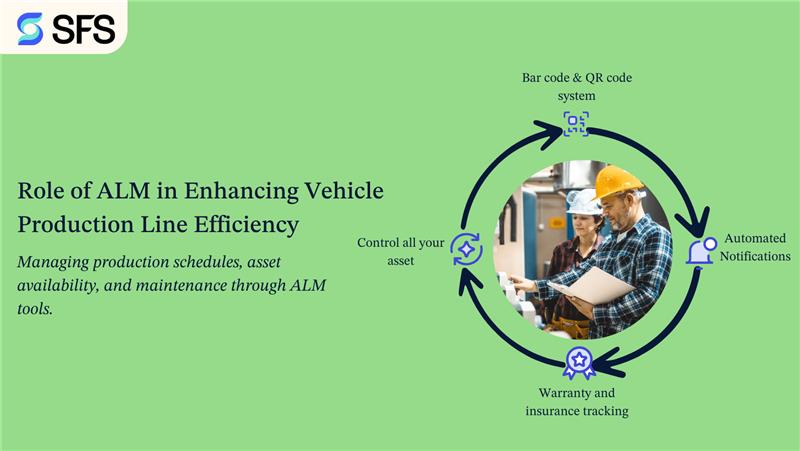
Role of ALM in Enhancing Vehicle Production Line Efficiency: Asset Lifecycle Management (ALM) plays a crucial role in optimizing vehicle production lines by ensuring assets are efficiently tracked, maintained, and utilized throughout their lifespan. From procurement to decommissioning, ALM enables predictive maintenance, reduces downtime, and improves equipment reliability. It also aids in cost control, compliance, and continuous improvement by providing real-time insights into asset performance. By aligning asset strategies with production goals,
manufacturers can achieve higher output, lower operational costs, and improved overall efficiency.
Case study on how organizations benefit from Smart ALM software for Enhancing Vehicle Production Line Efficiency.
Challenge: A well-known automaker with production plants all throughout the world. Unexpected equipment failures, ineffective maintenance plans, and a lack of real-time asset health visibility caused the organisation to experience frequent production disruptions. Delays in reaching delivery goals, more maintenance expenses, and more downtime were the results of these problems.
Solution: The organization implemented a Smart Asset Lifecycle Management (ALM) software that offered:
1. Reduced downtime by 23%.
2. Decreased maintenance costs by 33%.
3. Real-time monitoring of critical machinery and tools.
4. Predictive maintenance powered by AI and IoT sensors.
5. Boost operational efficiency by 41%.
Managing production schedules, asset availability, and maintenance through ALM tools.
Tools Help Manage Production Schedules, Asset Availability, and Maintenance:
· Integrated Scheduling: Production plans and maintenance schedules are synchronized using ALM tools. By coordinating, the production schedule is kept uninterrupted by scheduling preventative maintenance during off-peak times or planned downtime.
· Real-Time Asset Monitoring: Asset condition (temperature, vibration, usage hours, etc.) is continuously monitored by IoT-enabled ALM systems. Production managers may precisely determine asset availability and modify production flow thanks to this real-time visibility.
· Predictive Maintenance: ALM systems anticipate issues before they occur by using AI and historical data, as opposed to reactive maintenance. Production continuity is maintained, and unplanned breakdowns are decreased due to these predictive capabilities.
· Resource Optimization: ALM software helps allocate manpower, tools, and spare parts efficiently. By knowing which assets need service and when, teams avoid over-maintenance or last-minute fixes.
· Downtime Reduction: Unnecessary downtime is prevented when production planning and maintenance use coordinated data. Reports and alerts enable prompt problem solving while preserving a consistent output.
· Performance Analytics: ALM tools provide dashboards and KPIs to evaluate asset utilization and downtime trends. This data supports continuous improvement in production scheduling and maintenance planning.
Conclusion: Smart ALM software transformed the way assets were managed across the production line. The result was not just higher efficiency and cost savings but also improved product quality and delivery reliability. The company now uses predictive insights to make data-driven decisions, plan maintenance proactively, and align asset strategy with production goals.
End with a clear next step: Are you ready to upgrade your Asset Lifecycle Management processes and take your business to new heights? Contact Smart Factory Solutions today and learn how we can be tailored to meet your specific needs. Our team is eager to provide personalized recommendations and demonstrate how our solutions can move your business forward. Contact us now and take the first step toward achieving exceptional quality and customer satisfaction.



Hi, this is a comment.
To get started with moderating, editing, and deleting comments, please visit the Comments screen in the dashboard.
Commenter avatars come from Gravatar.