
Introduction: Information moves swiftly in the fast-paced corporate world of today, and it frequently changes at the same rate. Because of this, document version control is not just a useful technology but also an essential component of any company’s information management plan. Handling massive volumes of data can be difficult. It can result in confusion, wasted effort, and possible security issues if left ignored.
What is Document Version Control? Document version control is the system of managing changes to documents by tracking different versions over time. This includes labelling each version, identifying who made changes, when changes were made, and what exactly was altered.
Why Is It Important?
- Reduces errors and miscommunication: Employees may inadvertently work on out-of-date documents if there is no clear version history, which could result in expensive errors or redundant work. Everyone is essentially on the same page thanks to version control.
- Improves Collaboration: Version control enables any team member working on a document to view changes in real-time or roll back to previous iterations if needed. This promotes seamless cooperation, even between divisions or locations.
- Maintains Compliance and Audit Trails: Strict documentation is necessary for regulatory compliance in many businesses. A robust version control system preserves an open record of modifications, a crucial audit trail that can assist in adhering to regulatory or business requirements.
- Supports Knowledge Retention: Version-controlled documents maintain the development of rules, procedures, and strategies even when employees come and depart. This guarantees that over time, institutional knowledge won’t be lost.
- Saves Time: Rather than wasting time searching for the “right” version or redoing work, employees can access the most current, approved document instantly. This increases efficiency and productivity.
Case studies on how organizations manage document version control with smart document management software.
Challenge: A manufacturing company. The inability of more than 200 users to locate and organise CAD designs and manufacturing documentation across several servers led to out-of-date versions and production problems.
Solution: Smart document management tool control system is implemented to simplify access, get the right version, and reduce paper usage and printing costs.
Results:
- 37% Faster Processes: Eliminate manual searches and streamline workflows.
- 70% Reduction in Errors.
- 20% Cost Savings: Cut down on unnecessary storage and printing expenses.
- Issue cycle reduced from roughly 1 hour to 10 minutes, even when releasing batches of documents.
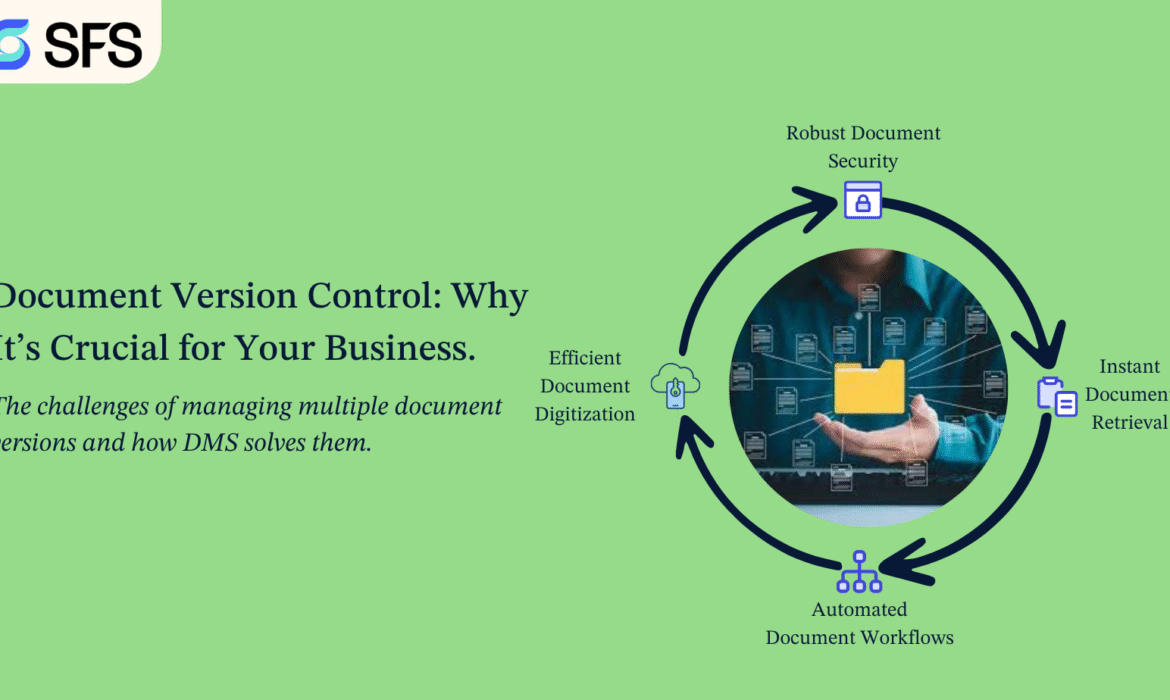
The challenges of managing multiple document versions and how DMS solves them.
Managing several document versions can become more problematic than a printer clog at a crucial meeting.
The difficulties and how a Document Management System (DMS) can eliminate them -or at least make them behave themselves – are broken down here.
Challenges of Managing Multiple Document Versions:
- Team members might work on outdated files or mix up the latest version with an older draft.
- Important information from earlier iterations may be overwritten by fresh edits if version control is not implemented properly.
- Recovering accidentally deleted or replaced content can be time-consuming or impossible.
- Multiple people editing different copies leads to duplication of work and conflicting changes.
- Merging edits manually increases the chance of errors.
- It’s hard to track who made which changes and when.
- For sectors that rely heavily on compliance, this can be a major problem because accountability and audit trails suffer.
- Having several copies spread across shared folders, desktop computers, and email attachments wastes space and makes searching difficult.
How a DMS Solves These Challenges:
- The DMS maintains access to older versions of documents while storing the most recent version whenever a document is modified.
- You can easily revert to an earlier version if needed.
- Metadata (editor name, timestamp, change summary) is stored alongside each version, eliminating guesswork.
- All documents live in a single, organized repository, accessible to authorized users from anywhere.
- Everyone works on the same “single source of truth.
- Features like check-in/check-out, simultaneous editing, and real-time commenting reduce conflicts and duplication.
- Full history logs help meet regulatory requirements and maintain accountability.
- Old versions are archived efficiently, preventing multiple random copies from eating up space.
Conclusion: Implementing document version control is crucial for reducing risk, increasing productivity, and maintaining competitiveness, regardless of the size of your business. It shields your company from misunderstandings, legal problems, and inefficiencies, freeing up your workers to concentrate on what really counts: expansion and creativity.
End with a clear next step: Are you ready to upgrade your document management processes and take your business to new heights? Contact Smart Factory Solutions today and learn how we can tailor it to meet your specific needs. Our team is eager to provide personalized recommendations and demonstrate how our solutions can move your business forward. Contact us now and take the first step toward achieving exceptional quality and customer satisfaction.