

How to Choose the Right Document Management System for Your Business?
Introduction: Improving Security and Performance. Making the switch to digital is a progressive move. However, managing massive data can be challenging. It can lead to chaos, wasted effort, and possible security risks if left unattended. Fortunately, document management software has transformed how companies manage, organise, and access their data. Document management software is still unfamiliar to many firms, though. Let us now examine the document management tool and how it can help your business operate more efficiently, effectively, and safely.
What is Document Management Software? An electronic system called document management software is made to track, manage, and store digital documents. The days of moving file cabinets full of paper by hand are done. All your vital files are centralised in a safe digital format using Document Management Software (DMS). To guarantee that your team always gets the most recent information, these systems also facilitate sharing, remote access, and version control.
How to select the right DMS for your Business? You must consider several important aspects and weigh your options according to your unique business requirements to make an informed choice. This thorough guide will assist you in selecting the ideal DMS for your company:
Analyse Your Business Requirements: Consider how many people and documents your company handles regularly. While major corporations require powerful, scalable systems, small firms may prefer simpler, more cost-effective alternatives. Decide what kinds of documents (such as contracts, invoices, reports, and emails) you will be handling. Select a DMS platform that can meet your unique requirements, as some specialise in particular document types.
Ease of Use: Users should be able to upload, find, and organise documents with ease thanks to the DMS’s user-friendly interface. Your employees will need less training if it is simple to use. Select the best document management software according to ease of use.
Document Storage and Retrieval Features: Strong indexing and search features, such as full-text search, metadata tagging, and OCR (Optical Character Recognition) for scanned documents, should be included in a quality DMS. To speed up retrieval, the DMS should make it simple for you to tag, organise, and classify documents.
Collaboration Features: Choose a DMS that facilitates real-time document collaboration, which enables several people to work on the same file at once (such as Google Docs-style capabilities). The ability for users to directly annotate or remark on documents can enhance team cooperation and communication. Operations can be streamlined, and bottlenecks can be decreased by automating approval processes.
Security: You should be able to manage who can see, edit, and distribute documents using the DMS. Seek out settings for granular permissions, such as user-specific rights and role-based access. both at rest (when stored on servers) and in transit (when documents are transferred). To safeguard sensitive data, encryption is essential. Select a DMS that has thorough audit records that indicate who accessed, modified, or shared documents and when for compliance requirements.
Cost Considerations: The cost of a DMS is usually determined by variables like features, storage capacity, and user count. While some providers demand one-time payments, others offer subscription-based pricing. Don’t only concentrate on the initial expense. Consider recurring expenses for things like upkeep, support, storage, and updates.
Key features to look for in a Smart Document Management Software.
When selecting a Smart Document Management Software (DMS), consider the following key features to ensure efficiency, security, and ease of use:
Automated Document Workflows: Workflow automation is an effective technique for companies trying to make repetitive operations more efficient. You can use this functionality to automate document-related tasks, including reviews, approvals, and notifying users when something needs to be done. For instance, the system can automatically forward newly submitted documents to the relevant individual for approval or review, guaranteeing quicker return times and lowering the possibility of human error.
Document Storage & Organization: Allows access to documents from any location, guaranteeing scalability and flexibility. aids in document classification with hierarchical folder structures, labels, and metadata. preserves earlier iterations of a document and monitors modifications over time. enhances searchability by converting scanned documents or photos into editable and searchable text.
Easy Document Access & Sharing: SmartDM offers users unmatched sharing and accessibility features. Employees may quickly find and retrieve crucial papers in a matter of seconds thanks to its user-friendly design. The program uses sophisticated indexing and tagging tools to automatically classify texts, making it possible to conduct efficient searches using keywords or metadata.
Efficient Version Management: Version management is a critical feature in a Smart Document Management System (DMS) that ensures users can track, control, and retrieve different versions of a document while maintaining data integrity and collaboration efficiency.
Robust Document Security: SmartDM uses multi-layered access control methods to prioritise security. To specify who can read, change, or share files, organisations can utilise user rights that are customisable. Sophisticated encryption methods improve document security, guaranteeing that your priceless information is safe and only accessible by authorised people.
Instant Document Retrieval: Search and retrieve documents or information from your digital library with ease. Rapid document retrieval is made possible by SmartDM, which enables staff members to find important information in a matter of seconds. With the use of sophisticated search engines and metadata tagging, users may quickly sort through thousands of documents according to dates, keywords, or other criteria.
Comparing cloud-based vs. on-premises DMS: Pros and cons.
Cloud-Based vs. On-Premises:
- Cloud-Based DMS: Provides reduced upfront expenses, flexibility, and remote access. With frequent updates and cloud storage choices, it’s frequently simpler to expand and manage. But it’s crucial to make sure the cloud solution meets your privacy and security requirements.
- On-Premises DMS: Gives your company total control over the protection and storage of documents. Nevertheless, it usually necessitates greater initial expenditures, continuous upkeep, and IT assistance. For businesses with stringent data control requirements, it’s a good option.
| Feature | Cloud-Based DMS | On-Premises DMS |
| Accessibility | Anywhere, any device. | Limited to company network (unless configured for remote access). |
| Security | Handled by the provider. | Full control over security measures. |
| Cost | Subscription-based, lower upfront costs. | High initial cost, but no recurring fees. |
| Customization | Limited. | Highly customizable. |
| Scalability | Easy, flexible storage plans. | Requires additional hardware investment. |
| IT Maintenance | Requires an in-house IT team. | Limited to the company network (unless configured for remote access). |
| Compliance | May not meet strict regulations. | Best for industries with strict security/compliance needs. |
Conclusion: Functionality, usability, security, and affordability must all be balanced when selecting the best DMS for your company. Spend some time evaluating your unique requirements, experimenting with various solutions, and making sure the system you select will enhance compliance and cooperation while streamlining your document operations.
End with a clear next step: Are you ready to upgrade your Document management processes and take your business to new heights? Contact Smart Factory Solutions today and learn how we can be tailored to meet your specific needs. Our team is eager to provide personalized recommendations and demonstrate how our solutions can move your business forward. Contact us now and take the first step toward achieving exceptional quality and customer satisfaction.
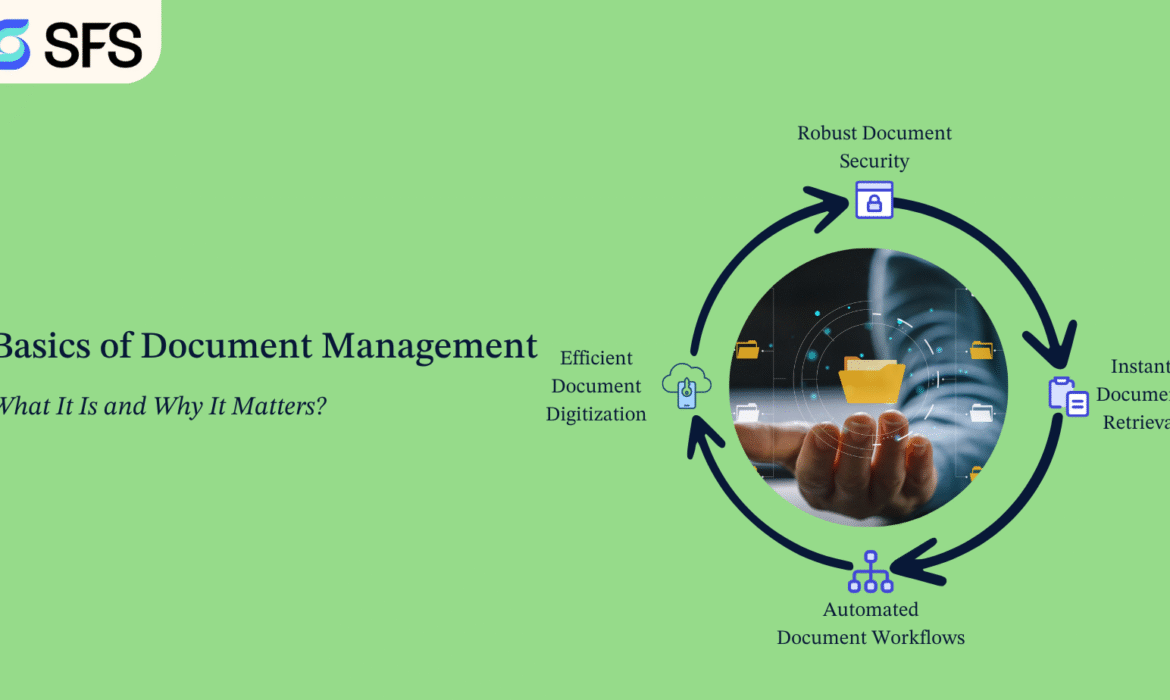
Basics of Document Management: What It Is and Why It Matters?
The methodical organisation, control, and storage of records and papers inside a company is known as document management. It guarantees that crucial data is kept safe, easily accessible, and in accordance with applicable laws. Organisations can increase productivity, lower risks, and maintain regulatory compliance with the aid of efficient document management.
An introduction to document management systems (DMS) and their role in modern businesses.
Businesses create, save, and distribute a vast volume of papers every day in the fast-paced digital world of today. Effectively handling these documents is now essential to the success of any firm. By enhancing accessibility, guaranteeing regulatory compliance, and optimising document-related procedures, Document Management Systems (DMS) have become a viable solution to this problem. This introduction examines DMS’s definition, salient characteristics, and crucial function in contemporary corporate operations.
The Role of DMS in Modern Businesses:
Document Management Systems are now vital tools for businesses of any size. They go beyond just storing documents, playing a key role in boosting productivity, facilitating collaboration, and ensuring adherence to legal and regulatory standards.
- Improve Productivity: Many document-related processes, including indexing, searching, and retrieval, are automated by DMS solutions, which saves time and lowers the possibility of human error. Employee productivity can be raised by giving them rapid access to the appropriate papers so they can concentrate on their primary duties.
- Improved Cooperation: Collaboration is now more crucial than ever in the age of remote work and multinational teams. No matter where they are physically located, staff members can view and modify documents in real time using a DMS. Improved teamwork and communication are fostered by this smooth information exchange.
- Data Security and Risk Management: Sensitive company data must be protected since cyber dangers are increasing. A DMS lowers the danger of data breaches by offering strong security features including encryption, access limits, and backup options. Keeping an audit trail also makes it easier for businesses to spot any illegal document changes or access.
- Cost Savings: A DMS can assist companies in lowering their operating costs by eliminating the requirement for physical storage and cutting down on expenditures associated with paper. Time saved by effective document management procedures also results in financial savings.
The key benefits of a digital document management system over traditional paper-based method.
When opposed to conventional paper-based techniques, the following are the main advantages of a digital document management system (DMS):
- Reduces physical storage needs, manual labour, and inefficiencies.
- Helps maintain compliance with industry regulations by implementing retention and access policies.
- You can access digital documents on any device, at any time, and from any location.
- Advanced search functionality allows users to locate documents quickly using keywords, tags, or metadata.
- To protect sensitive data, digital systems include role-based access control, password protection, and encryption.
- Streamlines workflows by integrating with other business tools (e.g., CRM, ERP).
- Reduces time spent on manual processes like sorting, filing, and searching for paper documents.
- Minimizes the need for physical storage space, such as filing cabinets or archives.
- Lowers the carbon footprint by minimizing the need for physical document transportation and storage.
- Helps organizations comply with industry regulations by providing audit trails, version control, and retention policies.
- Can be expanded to accommodate expanding companies’ needs without requiring more paper file management.
- Facilitates real-time collaboration by allowing multiple users to view and edit documents simultaneously.
- Automatic backup and recovery features protect against data loss due to system failures or disasters.
- Integrates with communication tools to streamline teamwork and project management.
- Allows for customized workflows, templates, and automation based on business requirements.
How effective document management improves efficiency, collaboration and compliance.
In organisations, efficient document management is essential for improving productivity, teamwork, and compliance. Businesses can increase communication, streamline processes, and more successfully comply with regulatory obligations by putting in place a strong document management system (DMS).
- Enhanced Efficiency: Employees spend less time looking for files and information when a document management system is organised. Businesses may guarantee that workers have rapid access to the information they require by digitising and organising papers, which will speed up decision-making and task completion. By doing away with manual procedures, lowering human error, and guaranteeing that papers are sent to the appropriate individuals at the appropriate times, automated workflows further boost productivity.
- Improved Collaboration: No matter where they are physically located, team members can view, edit, and share documents in real-time thanks to document management systems, which promote collaboration. By ensuring that everyone is working on the most recent version of a document, features like version control reduce errors and confusion. Multiple people can work together on a project at once using secure cloud-based storage, which boosts creativity and productivity.
- Compliance: Avoiding fines and protecting a company’s reputation depend on maintaining compliance with legal and industry requirements. By offering safe storage, audit trails, and access controls, a document management system assists businesses in meeting these standards. Automated retention procedures lower the risk of non-compliance by ensuring that documents are kept and disposed of in conformity with legal requirements. Furthermore, security concerns are reduced by encryption and user authentication measures, which shield private data from unwanted access.
Conclusion: To sum up, an efficient document management system increases productivity by making information easier to access, fosters teamwork through real-time sharing and version control, and fortifies compliance by guaranteeing safe document handling and regulatory compliance. Productivity, communication, and risk management are all expected to significantly increase for organisations that invest in document management.
End with a clear next step: Are you ready to upgrade your document management processes and take your business to new heights? Contact Smart Factory Solutions today and learn how we can tailor it to meet your specific needs. Our team is eager to provide personalized recommendations and demonstrate how our solutions can move your business forward. Contact us now and take the first step toward achieving exceptional quality and customer satisfaction.
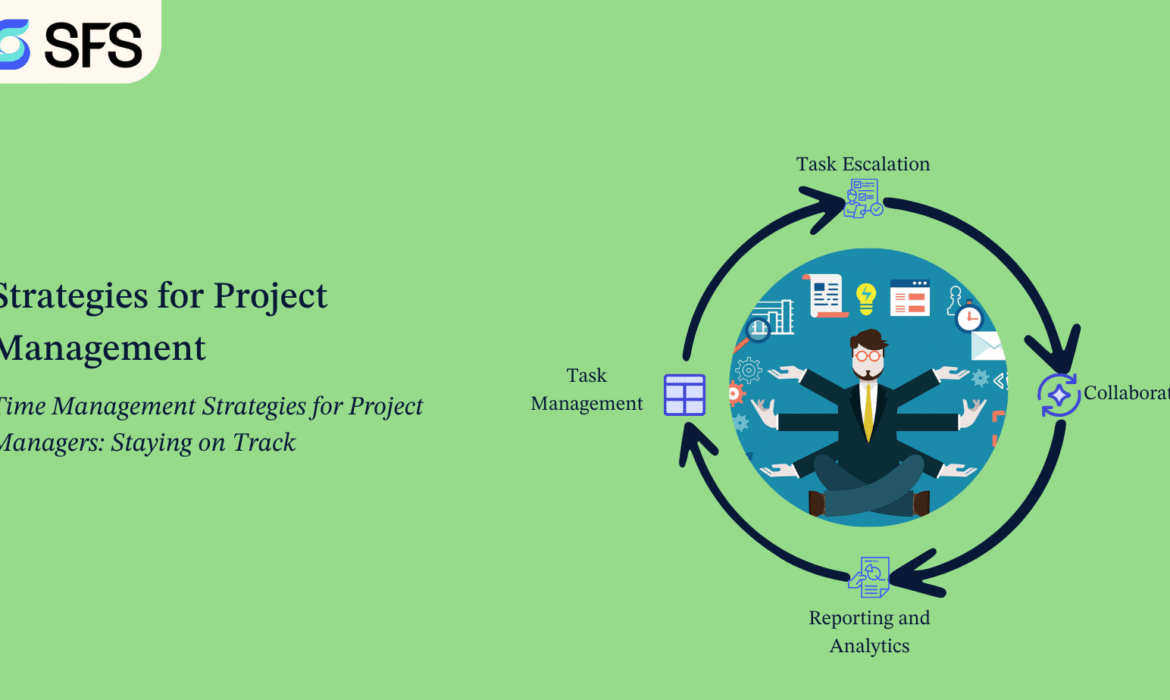
Time Management Strategies for Project Managers: Staying on Track
Introduction: Planning, carrying out, and overseeing projects to accomplish goals and objectives within a set budget and timeframe constitute the specialised field of project management. Its basic nature determines the technologies used in the project. However, the outcome of a project is always determined by its planning, implementation, and monitoring – this is where project management software comes in. Now with PMS, managers can complete projects 30% faster and reduce non-valuable tasks by 40%
Time Management Strategies for Project Managers: For project managers, efficient time management is essential. It might be difficult to keep on course when there are many stakeholders, changing priorities, and short deadlines. These are some essential tactics to assist project managers manage their time effectively and oversee productive initiatives.
- Set Clear Goals and Prioritize Tasks.
- Create a Detailed Project Plan.
- Leverage Project Management Tools.
- Practice Effective Scheduling.
- Manage Meetings Efficiently.
- Take care of your project management.
The case study is based on how organizations are using project management software to manage the time of project managers.
A manufacturing company utilizes project management software, enabling project managers (PMs) to allocate their time more efficiently. PMs often juggle multiple tasks, including planning, tracking progress, communicating with teams, and reporting. Without proper tools, much of their time is lost to manual processes and administrative overhead.
The Challenge: Project managers face constant pressure to juggle tasks such as:
- Planning and scheduling
- Resource allocation
- Stakeholder communication
- Documentation and reporting
- Time inefficiencies
- Missed deadlines
- Poor communication
Key Outcomes: Despite initial difficulties, the project benefited from proactive time management:
✅ Templates reduced repetitive planning tasks by 40%.
✅ PMs saved 20% of their weekly time on task tracking.
✅ Managers complete projects 30% faster with PMS
✅ Managers reduced non-valuable tasks by 40%
Extensive smart project management features.
Utilise the sophisticated features of SFS Smart PM to enhance your manufacturing initiatives. Enhance teamwork, automate processes and guarantee effective project management.
- Task Management
- Collaboration
- Task Escalation
- Reporting and Analysis
- Gantt Charts
- Role-wise Dashboard
Techniques for setting realistic project timelines and meeting deadlines.
Project success depends on establishing reasonable timetables and fulfilling deadlines. Here are some essential methods to help you accomplish both:
- Define Clear Project Scope and Objectives: Break the project down into clear, specific deliverables and results. This reduces ambiguity and scope, making it easier to plan accurately.
- Use Historical Data and Expert Judgment: Refer to previous similar projects and seek advice from experienced team members. Provides realistic time and effort estimates based on actual performance.
- Build in Buffers and Contingency Time: Give uncertain or high-risk tasks time buffers. withstands unforeseen setbacks without affecting final timelines.
- Prioritize Tasks: Identify and monitor tasks on the critical path (those that directly impact the project deadline). Make sure to focus on what’s most important for timely delivery.
- Monitor Progress Regularly: Conduct regular checkups, status updates and progress reviews. Ensuring early detection of problems and timely correction.
- Communicate Effectively: Keep the lines of communication open with team members and stakeholders. Verify alignment, make expectations clear, and address problems as soon as they arise.
- Post-Project Review: To determine what worked and what didn’t, do a retrospective. enhances future project planning and estimation.
Conclusion: Staying on track as a project manager requires planning, discipline, and the right tools. By implementing these time management strategies, you can lead your team more effectively, meet deadlines consistently, and deliver successful outcomes.
End with a clear next step: Are you ready to upgrade your Project Management processes and take your business to new heights? Contact Smart Factory Solutions today and learn how we can be tailored to meet your specific needs. Our team is eager to provide personalized recommendations and demonstrate how our solutions can move your business forward. Contact us now and take the first step toward achieving exceptional quality and customer satisfaction.
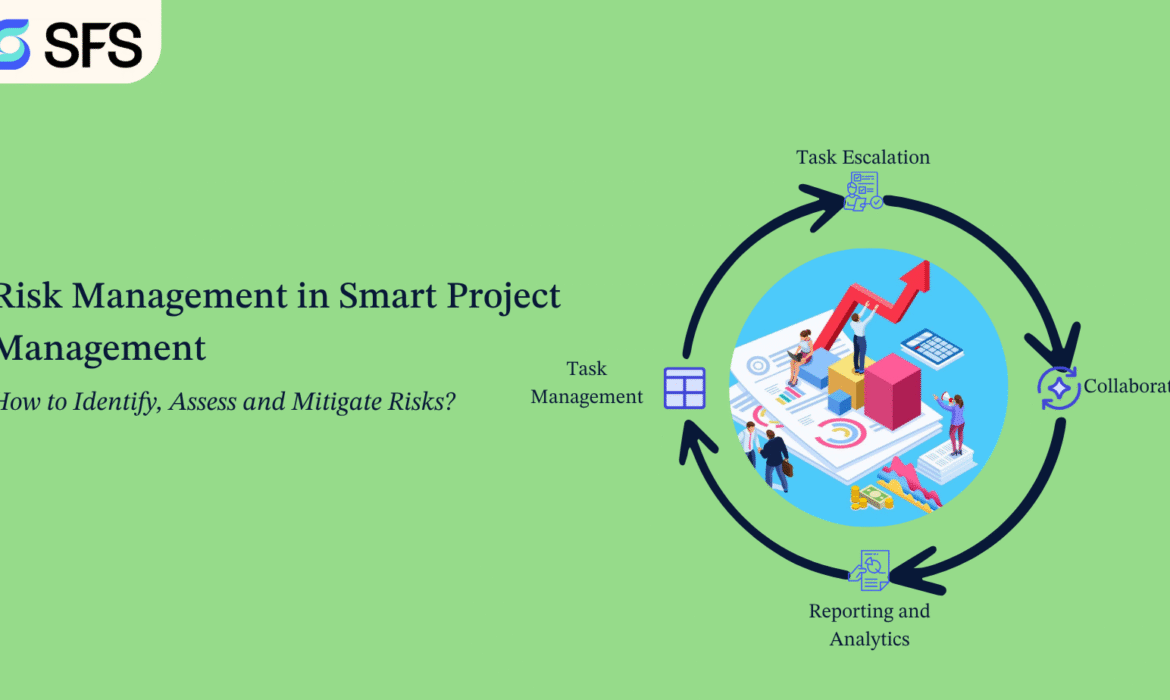
Risk Management in Smart Project Management: How to Identify, Assess and Mitigate Risks?
Introduction: Smart project management software facilitates resource management, planning, and organisation for successful project execution. To guarantee a successful project completion, this solution is made to help teams and project managers keep track of assignments, deadlines, budgets and progress. In this blog, we will discuss in detail about risk management in smart project management, highlighting how to identify, assess and mitigate risk in a successful project management approach. We will also discuss key solutions that can help you create a roadmap to success.
Risk Management in Smart Project Management: To guarantee project success, risk management in smart project management is a systematic procedure that aids in risk identification, assess and mitigation. Here’s a thorough method:
Identifying Risks: Accurate risk identification entails identifying possible dangers and unknowns that could affect the project.
Methods to Identify Risks:
- Brainstorming: Engage team members to identify risks based on experience.
- SWOT Analysis: Analyse project strengths, weaknesses, opportunities and threats.
- Expert Judgment: Seek advice from stakeholders and experts.
- Historical Data: Review past projects for similar risk patterns.
- Checklists & Frameworks: Use standardized risk identification templates.
Assessing Risks: After identifying risks, evaluate their potential impact and likelihood.
Key Assessment Techniques:
- Qualitative Analysis: Use risk matrices to rank hazards according to likelihood and seriousness.
- Quantitative Analysis: For an accurate evaluation, use numerical methods such as Expected Monetary Value (EMV) or Monte Carlo simulations.
- Risk Categorization: Classify risks (e.g., technical, operational, financial, external).
- Risk Register: Maintain a document listing risks, their impact and response strategies.
Mitigating Risks: Creating plans to reduce risks and increase possibilities is known as risk mitigation.
Common Mitigation Strategies:
- Avoidance: Reduce high-risk activities by changing the goals or scope of the project.
- Mitigation: Reduce the impact by taking proactive steps (e.g., more training, better resource allocation).
- Transfer: Shift risk responsibility to third parties (e.g., insurance, outsourcing).
- Acceptance: Prepare contingency plans for unavoidable risks.
Case studies on how organizations are using project management software to manage projects.
A manufacturing company needed a flexible project management solution to support rapid innovation, production scaling, and continuous improvement in their factories. The company adopted project management tools to manage its rapid manufacturing processes. Key benefits include:
- Promote teamwork and communication across departments and locations.
- Automate updates, tasks, and reminders to ensure optimal project execution.
- Make data-driven choices to efficiently manage risks and distribute resources.
- Use a single source to access project documentation, templates, and forms.
- Customise reports to obtain an in-depth understanding of different project components.
Key outcomes of the smart project management lifecycle.
Despite early difficulties, the project benefited from proactive risk management:
✅ Predictive maintenance can cut IoT failures by 37%.
✅ Stop security breaches by keeping an eye on things in real time.
✅ Keep budget deviation within 5% of the planned cost.
✅ Gain public acceptance, with 75% approval rates after privacy measures were strengthened.
Extensive smart project management features.
Utilise the sophisticated features of SFS Smart PM to enhance your manufacturing initiatives. Enhance teamwork, automate processes, and guarantee effective project management.
Task Management: Any successful project is built on a foundation of efficient task management. This feature makes sure that everyone is aware of their responsibilities, how to avoid bottlenecks and how to maintain the project’s timeline. This tool makes planning and prioritisation easier than ever by providing a clear picture of what lies ahead.
Collaboration: When everything is centralised, collaboration is smooth. When team members have access to an intelligent project management system, they can communicate in real time, share files and provide and receive feedback. Everyone remains linked thanks to the integrated collaboration tools. Collaboration is improved and misunderstandings are reduced when all information, including documents and conversations, is kept in one location.
Task Escalation: Task escalation is used when certain tasks require greater attention than others. Tasks that are behind schedule or need greater priority attention are highlighted by intelligent project management software. A task is moved up the chain for prompt attention when it is escalated. This function keeps projects on track and assists in resolving possible obstacles before they become significant issues.
Reporting and Analytics: Detailed reports on task completion, resource utilisation, budget performance and other topics can be produced using reporting and analytics tools. You can make well-informed decisions based on real-time insights by using the analytics to assess the project’s status. Additionally, customisable reports enable you to concentrate on the indicators that are most important to your organisation.
Gantt Charts: For displaying the project timeline and task relationships, Gantt charts are a crucial tool. Gantt charts, which are a feature of project management software, provide a clear, visual depiction of the relationships between tasks and their due dates.
Role-Based Dashboards: Not all team members require the same data. Project management software offers individualised views that are catered to each user’s unique requirements through role-based dashboards.
Conclusion: To efficiently control risks, smart project management combines technology, proactive planning and teamwork. Project managers may enhance decision-making, guarantee project success and preserve resilience in unpredictable situations by methodically identifying, evaluating and managing risks.
End with a clear next step: Are you ready to upgrade your Project Management processes and take your business to new heights? Contact Smart Factory Solutions today and learn how we can be tailored to meet your specific needs. Our team is eager to provide personalized recommendations and demonstrate how our solutions can move your business forward. Contact us now and take the first step toward achieving exceptional quality and customer satisfaction.

How to Build an Effective Project Team with Smart Project Management Software?
Introduction: From planning and scheduling to quality control and resource allocation, the intricacies of manufacturing project management necessitate a strong and dependable solution. Project management software is useful in this situation. Manufacturers may increase production, streamline processes, and guarantee on-time product delivery by utilizing the appropriate tools. We will examine the main advantages of project management software in this blog.
What Is a Project Team? A cross-functional collection of people working towards a common objective is called a project team. Executives, project managers, departmental team leaders, and team members might all fall under this category. This project team’s organisational structure, which might include many projects’ organisational structures, determines how it functions. Although having a project manager is essential, your project team should also include other key players.
How to Build an Effective Project Team: Here are some tips for project managers on how to use best practices and intelligent project management software to create a productive project team:
- Start by describing the objectives, deliverables, and purpose of the project, and match roles to the skills necessary for project success.
- Make use of the goal-setting tools in the project management software, including roadmaps and milestones, to give the project vision a visual manifestation.
- Before allocating jobs, evaluate availability, skill sets, and workload using the software’s resource management capabilities.
- To guarantee consistent project execution, make use of the software’s templates and procedures. To save time, automate repetitive processes.
- To assign tasks and provide clear explanations, use the task assignment features.
- Establish a setting that encourages communication so that updates and ideas may be shared.
- Use the software’s commenting, real-time messaging, and connectivity with Slack or Teams to maintain centralised and easy communication.
- To guarantee consistent project execution, make use of the software’s templates and procedures. To save time, automate repetitive processes.
- Utilise the software’s survey or retrospective features to gather and examine team input.
- Utilise the program to keep track of achievements and deliver automated congratulations on reaching milestones.
Tips for assembling a project team with the right mix of skills and expertise.
Assembling a project team with the right mix of skills and expertise is crucial for success. The following advice will assist you in assembling the most qualified group for your project:
- Define Project Objective and Needs: Make sure you fully comprehend the project’s goals, deliverables, and schedule before choosing team members. This will assist you in identifying the precise knowledge and abilities required.
- Technical Skills: Make sure you have the right balance of technical expertise in areas such as software development, engineering, design, data analytics, etc., depending on the nature of the project.
- Domain Expertise: Having team members with industry or subject matter experience is quite beneficial for specialised tasks. Domain expertise may ensure that the team is aware of the difficulties and expedite decision-making.
- Soft Skills: Seek candidates who possess both technical expertise and great problem-solving skills, since complicated tasks frequently require unconventional thinking. Successful teamwork depends on effective communication. Seek out individuals who can listen intently and articulate ideas clearly both orally and in writing.
- Experience: Strive for a mix of fresh talent and seasoned pros. Younger members can contribute new ideas and energy, while more seasoned members can provide strategic insights.
- Project Leadership Skill: Choose a competent project manager who can guide the group, oversee the use of resources, and maintain the project’s progress. Team members should be encouraged to take responsibility for their work and make suggestions for enhancements. This fosters an environment of initiative and responsibility.
The importance of clear communication, role definition, and team motivation.
A successful team is built on the foundation of clear communication, clearly defined roles, and team motivation. The following explains why each of these components is crucial:
Clear Communication: Everyone will grasp the objectives, priorities, and tasks if there is effective communication. This reduces mistakes and misdirected efforts. Team members may collaborate easily when information is shared transparently, which promotes trust and collaboration. Better decisions result from the interchange of ideas, opinions, and insights made possible by clear communication.
Role Definition: Everyone is aware of their duties and contributions when roles are clearly defined, avoiding overlap and confusion. Team members can concentrate on their abilities and complete tasks precisely when responsibilities are clearly defined. The team can better appreciate how each member’s efforts fit into the overall goals when everyone knows their role.
Team Motivation: Overall morale and cohesiveness are improved when team members are motivated to help one another in a favourable environment. Teams that are motivated are more innovative and productive, accomplishing objectives more successfully. A driven group can overcome obstacles and adjust to change more resolutely.
How to handle conflicts and ensure smooth collaboration within the team.
Resolve Conflicts Quickly: Recognise the fundamental problems before attempting to fix them. Refrain from picking sides; instead, concentrate on the facts and potential solutions. Permit team members engaged in the dispute to freely express their opinions in a controlled environment.
Task Management: In project management, task management is essential to guarantee that tasks are finished on schedule, within budget, and with the appropriate level of quality. The project remains structured, on course, and in line with its goals when tasks are managed well.
Collaboration: A key element of effective project management is collaboration. It entails the process of individuals and groups cooperating to accomplish a shared objective, exchanging knowledge, and offering their special talents and experience to complete the project on schedule, within scope, and within budget. Better decision-making, more innovation, and more efficient task execution are the results of effective teamwork.
Reporting and Analytics: Because they offer the data-driven insights required to track developments, make wise decisions, and guarantee that projects are completed on schedule, within scope, and within budget, reporting and analytics are crucial to project management. Project managers may maximise resources, inform stakeholders, and detect problems early by using efficient reporting and analytics.
Gantt charts: One of the most used tools in project management for organising activities, monitoring progress, and visualising the project timetable is the Gantt chart. Project managers and teams can view tasks, their durations, dependencies, and the overall timetable in a single perspective with the aid of these charts, which bear the name of their inventor, Henry Gantt.
Celebrate Successes: Utilise the software’s survey or retrospective features to gather and examine team input. Utilise the program to keep track of achievements and deliver automated congratulations on reaching milestones.
Conclusion: Using smart project management software to build an efficient project team involves more than just selecting the appropriate technology; it also involves fostering a collaborative environment, monitoring progress, and guaranteeing accountability and clear communication. Your project team will be well-positioned for success if you choose the appropriate software, define roles, set clear objectives, automate chores, and cultivate an open and transparent culture.
End with a clear next step: Are you ready to upgrade your Project Management processes and take your business to new heights? Contact Smart Factory Solutions today and learn how we can be tailored to meet your specific needs. Our team is eager to provide personalized recommendations and demonstrate how our solutions can move your business forward. Contact us now and take the first step toward achieving exceptional quality and customer satisfaction.
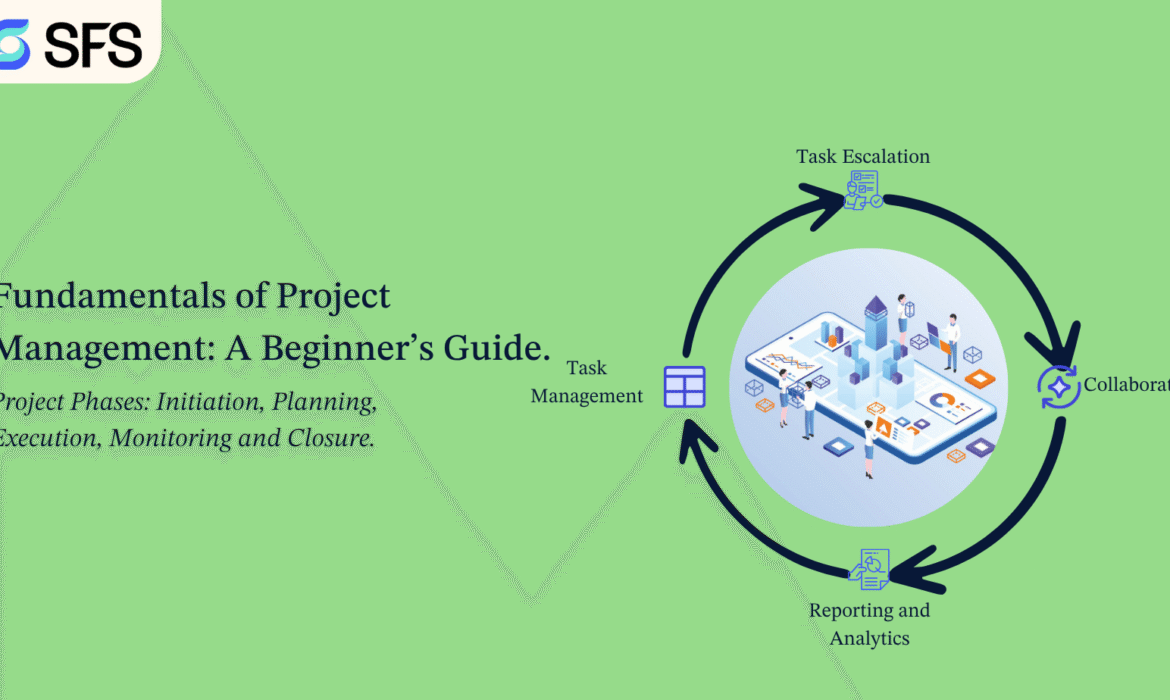
The Fundamentals of Project Management: A Beginner’s Guide to the Beginner.
To accomplish objectives within a predetermined timeframe, project management entails organizing, planning, and carrying out initiatives. It can be used in a variety of industries, including software development and construction. This is an introduction to the fundamental ideas of project management.
What is Project Management?
The process of applying tools, techniques, knowledge, and skills to project activities to achieve project requirements is known as project management. To complete a project on schedule, within scope, and within budget entails managing risks, resources, and finances.
Skills Required for Project Managers:
- Guiding and motivating the team to achieve their project goals.
- Encouraging open, honest communication and informing all parties involved.
- Managing deadlines and ensuring tasks are completed on schedule.
- Recognizing and resolving problems that come up throughout the process.
- Balancing the interests of stakeholders and securing necessary resources.
Key Principles in Project Management that every project manager should know.
Key Principles of Project Management: A project typically involves the following principles.
- Project Scope: Project management describes the aims, objectives, deliverables, and results of the project. It helps prevent “scope creep,” which is the addition of new duties without sufficient supervision.
- Project Timeline: Detailed timelines of when tasks and milestones should be completed in project management. This is essential for managing deadlines and ensuring timely delivery.
- Budget: The budget shows how much labor, materials, and other resources are expected to cost. It assists in making sure the project stays within the allocated budget.
- Resources: The human, physical, and technical resources needed to complete the project.
- Quality: Ensuring that the project satisfies the expectations of the stakeholders and the requirements.
- Risk Management: Recognizing and controlling possible hazards that can compromise the project’s success.
Overview of Project Phases: Initiation, Planning, Execution, Monitoring, and Closure.
The Project Management Phases: Project management typically follows a set process, often structured in five phases:
- Initiation: Develop a project charter and define the project’s objectives, scope, and stakeholders. This is where the need for the project is identified, and the feasibility of the project is assessed. The project charter was created to formally authorize the project.
- Planning: Create a detailed project plan, including timelines, budgets, resource allocation, and risk management strategies. Here, the necessity of the project is determined, and its viability is evaluated. The project is formally authorized by the creation of a project charter.
- Execution: This stage marks the start of the real job. To accomplish the project’s goals, team members collaborate, assign resources, and complete tasks. The project manager keeps tabs on developments, resolves problems, and interacts with stakeholders.
- Monitoring: This stage makes sure the project stays on course and continues alongside the execution phase. Performance is monitored, and if required, remedial measures are implemented. This entails managing modifications and comparing progress to the plan.
- Closure: The project is officially closed after it is finished. To learn from the project’s accomplishments and shortcomings, this entails delivering the finished product to the client, releasing project resources, and carrying out a post-project evaluation.
Common Terminology and Frameworks used in the Field of Project Management.
Key Terminology in Project Management:
- Project Management: Applying information, abilities, instruments, and methods to project tasks to fulfil project specifications and provide the intended outcomes.
- Stakeholders: People or groups actively participating in the project or whose interests could be impacted by its conclusion.
- Timeline: A thorough plan that specifies the due dates for project assignments. It comprises task dependencies, deadlines, and milestones.
- Resources: The personnel, materials, equipment, and financial capital needed to complete a project.
- Quality Management: Ensuring that the deliverables of the project fulfil the necessary quality requirements. Planning, ensuring, and controlling quality are all included in this.
- Project Charter: A formal document that gives the project manager the power to allocate resources to project activities and validates the project’s existence.
- Project Lifecycle: The series of phases that a project goes through from initiation to completion. These phases typically include initiation, planning, execution, monitoring and controlling, and closure.
- Milestones: Important events or turning points in the project lifecycle that indicate advancement or the accomplishment of important tasks.
- Change Management: The procedure for handling modifications to the project’s resources, timetable, or scope. This guarantees that any modifications are evaluated, accepted, and successfully put into effect.
Project Management Frameworks:
- PMBOK (Project Management Body of Knowledge): The Project Management Institute (PMI) created the PMBOK, which offers a set of accepted terms and project management best practices. Initiation, planning, execution, monitoring & controlling, and closing are the five process groups it includes. Integration, scope, time, cost, quality, human resources, communications, risk, procurement, and stakeholder management are among the other knowledge domains that are included.
- PRINCE2 (PRojects IN Controlled Environments): A methodical, process-based approach to project management. It places a strong emphasis on distinct project responsibilities, stages, and control methods, and is widely utilized in the UK and Europe. Delivering business value is the main purpose of PRINCE2, which also makes sure the project stays in line with corporate objectives.
- Agile: Software development frequently employs an incremental and iterative approach to project management. Agile uses brief development cycles, or sprints, to encourage adaptability, teamwork, and customer-focused delivery. Agile frameworks include Extreme Programming (XP), Scrum, and Kanban.
- Scrum: A well-liked Agile framework that is mostly applied to software development. Scrum prioritizes ongoing feedback, teamwork, and improvement while dividing work into smaller, more manageable units called sprints. The Development Team, Scrum Master, and Product Owner are all Scrum roles.
- Lean: A strategy aimed at increasing value through process improvement and waste elimination. Toyota Production System was its birthplace, and it has since been modified for use in several sectors, including software development (Lean Software Development).
- Six Sigma: A data-driven approach to finding and fixing flaws in processes to improve their quality. Six Sigma employs DMADV (Define, Measure, Analyse, Design, Verify) for process design and DMAIC (Define, Measure, Analyse, Improve, Control) for process improvement.
- Waterfall: A traditional, linear project management methodology where each phase is completed before moving on to the next. Waterfall is best suited for projects with well-defined requirements and little scope for changes.
- Critical Path Method (CPM): A method for figuring out the longest chain of interdependent jobs in a project, which determines how short it can be. It assists in determining which tasks need to be finished on schedule in order to prevent project delays.
- Critical Chain Project Management (CCPM): Resource limitations are incorporated into the planning process via CCPM, an extension of the Critical Path Method. Its main goal is to guarantee that vital resources are available when needed and are not over-allocated.
- Earned Value Management (EVM): This method compares the actual progress (Earned Value) and cost (Actual Cost) to the expected progress (expected Value) to assess the performance of a project. This aids in forecasting project results and monitoring schedule and cost performance.
- KPI (Key Performance Indicators): Metrics for assessing a project’s or its constituent parts’ success. Cost, time, scope, quality, and stakeholder satisfaction are all possible KPIs.
- PMI Talent Triangle: PMI created a framework that places an emphasis on the ongoing improvement of project management abilities. Technical project management, leadership, and strategy and business management are its three main components.
Conclusion: The dynamic profession of project management necessitates a combination of leadership, flexibility, and strategy. New project managers can establish a strong basis to successfully negotiate the challenges of project management by comprehending its foundations. Understanding these fundamentals will help you succeed in any project, whether you’re managing a small team or a large one.
End with a clear next step: Are you ready to upgrade your project management processes and take your business to new heights? Contact Smart Factory Solutions today and learn how we can be tailored to meet your specific needs. Our team is eager to provide personalized recommendations and demonstrate how our solutions can move your business forward. Contact us now and take the first step toward achieving exceptional quality and customer satisfaction.
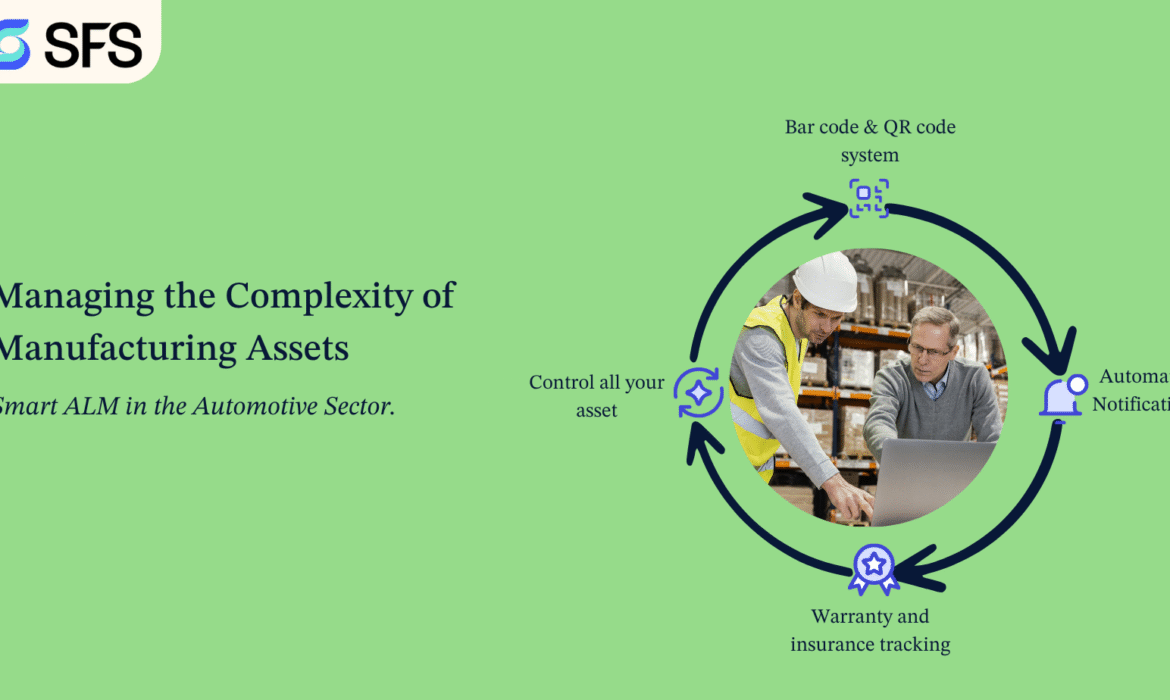
Managing the Complexity of Manufacturing Assets: Smart ALM in the Automotive Sector.
Introduction: Rapid technological developments have occurred in the automotive industry, and modern cars now have complex mechanical, software, and electronic systems. This complexity also applies to manufacturing assets, where production procedures necessitate smooth interdisciplinary collaboration. From design and development to production and maintenance, Smart Asset Lifecycle Management (ALM) is essential to the effective management of these resources.
In this blog, we will discuss how to manage the complexity of manufacturing assets. This should include the essential features and how a comprehensive solution like Smart Asset Lifecycle Management (Smart ALM) should be in the automotive sector.
ALM in Addressing and Managing Manufacturing Complexity: Interconnected systems used in modern car manufacturing necessitate real-time coordination. To manage this complexity, ALM offers the following advantages:
- Manufacturers may monitor changes, record compliance, and guarantee adherence to industry standards like ISO 26262 for functional safety and IATF 16949 for quality management with the use of ALM tools.
- Design, engineering, and production teams can work together efficiently with ALM, guaranteeing smooth integration of software and mechanical components.
Manufacturers can model production scenarios, streamline processes, and anticipate possible problems by leveraging digital twins and predictive analytics in ALM.
- Assets used in production must change as vehicle designs do. To reduce interruptions and guarantee production consistency, ALM offers organised change management.
- ALM assists in identifying wear and tear, planning preventive maintenance, and minimizing unplanned downtimes with real-time monitoring and AI-driven diagnostics.
Knowing Smart ALM in the Automobile Sector: In the automotive industry, smart asset lifecycle management, or SALM, is the intelligent tracking, monitoring, and optimisation of vehicle and component lifecycles using digital technologies, including cloud computing, blockchain, IoT, and artificial intelligence. This method improves production, operation, maintenance, and disposal sustainability while increasing efficiency and cutting costs.
Features of Smart Asset Lifecycle Management: All your IT assets, such as computers, software, machinery, and other items, are simple to manage and control. Oversee depreciation, usage, insurance, warranties, renewals, and other matters.
- Bar Code & QR Code System: It is simple to scan assets and obtain current information when barcode or QR code scanning capabilities are available, which minimizes errors and eliminates the need for human record-keeping.
- Control all your assets over the entire lifecycle: From purchase to disposal, complete control over assets is guaranteed via asset lifecycle management or ALM. To optimise efficiency and value, it includes planning, deployment, maintenance, and retirement. Costs are decreased, performance is enhanced, and asset lifespan is increased with proper tracking and optimisation. Return on investment, security, and compliance are all improved by a strategic ALM approach.
- Lifecycle Management: It is essential to manage an asset’s lifecycle, from purchase until disposal. Every asset’s complete history, including acquisition, deployment, use, maintenance, and final decommissioning or destruction, should be tracked by effective software. Businesses can save time and money by making smarter decisions about when to upgrade or replace assets thanks to this level of insight.
- Warranty and Insurance Management: It may be quite difficult, particularly for large businesses, to keep track of the insurance coverage and warranty expiration dates for every item. By keeping track of warranty and insurance information, asset management software streamlines this procedure and guarantees that you never miss a coverage or renewal deadline. In addition to saving time, this reduces risks and improves claim management.
- Custom Notifications and Reporting: Asset management software should offer customisable reports and notifications, as every organisation has different needs. Customisable alerts make sure you remain proactive by alerting you to impending maintenance, insurance renewals or performance problems. Furthermore, comprehensive reporting features provide information that can direct asset optimisation and decision-making.
- Ticketing and Issue Management: For operations to run smoothly, handling asset-related problems like maintenance tickets or repair requests is essential. Users can effectively log and track issues with asset management software that has integrated ticketing and issue management systems, guaranteeing prompt fixes and less downtime.
How ALM solutions can handle the diverse range of machinery and assets in automotive manufacturing.
Because they provide an organised, integrated method of managing software, hardware, and operating procedures, Application Lifecycle Management (ALM) solutions are essential for managing the wide variety of equipment and assets used in the automotive manufacturing industry. The intricacy of automotive manufacturing is addressed by ALM solutions in the following ways:
- All equipment, tools, and software assets may be tracked centrally with ALM systems.
- Guarantees documentation and version control for each piece of hardware and software component.
- Supports multiple programming languages, frameworks, and protocols used on different machines.
- Firmware management, hardware dependencies, and software upgrades are all smoothly integrated by ALM.
- Oversees the complete lifetime of software-driven tools, assembly lines, CNC machines, and robotic arms.
- Guarantees that production procedures and automobile parts meet legal criteria.
- Gathers information from Industrial Internet of Things (IoT) devices to predict possible malfunctions.
- Allows engineering, production, and IT teams to collaborate in real time.
- Guarantees documentation and version control for each piece of hardware and software component.
- Before making changes, it offers impact analysis, audit trail, and version control.
Conclusion: The importance of Smart ALM in managing manufacturing assets is growing as the automobile industry continues to embrace digital transformation. Automobile manufacturers may increase productivity, boost product quality, and adjust to changing market needs by putting strong ALM strategies into practice. Long-term success in the cutthroat automotive industry is ensured by the integration of Smart ALM with cutting-edge technologies like AI and IoT, which further enhances the capacity to handle complexity.
End with a clear next step: Are you ready to upgrade your ALM management processes and take your business to new heights? Contact Smart Factory Solutions today and learn how we can be tailored to meet your specific needs. Our team is eager to provide personalized recommendations and demonstrate how our solutions can move your business forward. Contact us now and take the first step toward achieving exceptional quality and customer satisfaction.

The Role of Predictive Maintenance in Automotive Manufacturing Asset Management Software.
Introduction: In the production of automobiles, predictive maintenance is revolutionary, especially when it comes to effective asset management software. It uses cutting-edge technology like sensors, artificial intelligence (AI), the Internet of Things (IoT), and data analytics to track the condition and functionality of machinery in real time. We’ll go over what asset management software is in this article, what features it should have and how a complete solution like Smart Asset Management software can assist in ensuring compliance, increasing efficiency, and streamlining operations.
Role of Predictive Maintenance in Automotive Manufacturing:
- Enhancing Equipment Uptime: To spot irregularities, predictive maintenance systems regularly check important machinery characteristics, including vibration, temperature, and pressure. Manufacturers can minimise unplanned production stoppages by anticipating breakdowns and addressing problems during planned downtimes.
- Improved Asset Lifespan: Constant observation guarantees that assets function at their best, lowering stress and deterioration. Preventing minor issues from growing into major ones extends the life of equipment and lowers the need for expensive replacements.
- Data-Driven Decision Making: Large volumes of data are analysed by predictive systems to produce useful insights into asset performance and health patterns. Manufacturers can make better judgments about replacing or upgrading their equipment by using historical and predictive data.
- Enhanced Productivity: Production schedules can be maintained with fewer interruptions if there are fewer unanticipated failures. Machines that receive regular maintenance run at their best, increasing total manufacturing output.
- Regulatory Compliance: Ensure compliance with industry regulations and maintain audit trail. Accidents brought on by malfunctioning machinery are less likely, when possible equipment failures are identified. By ensuring that equipment conforms with safety and operational standards, predictive maintenance lowers the risk of noncompliance.
- Centralize Everything in One Place Using Integrations: To consolidate all your data on one platform, integrate Smart ALM into your business processes. This facilitates data synchronisation across several systems, making it easy to maintain efficiency and organisation. Your workflow is streamlined, which facilitates and improves asset and operation management.
Reducing unexpected breakdowns in automotive plants through predictive analytics.
Reducing unplanned malfunctions in auto factories is a crucial goal since these interruptions can affect overall productivity and result in expensive production delays. A viable way to accomplish this is through predictive analytics, which makes it possible to proactively identify and address possible problems before they result in equipment failure. Predictive analytics does this in the following ways:
- Critical machinery is equipped with sensors that gather data in real time on variables including temperature, pressure, vibration and RPM.
- Even minor departures from standard operating practices are quickly detected because to the constant flow of information.
- Predictive analytics systems look for aberrations that can point to possible problems by comparing historical data with current performance measures.
- Machine learning models are trained to identify trends linked to early failure indicators, such as overheating or wear and tear.
- Predictive systems evaluate the probability and timing of equipment failures by analysing trends in equipment performance.
- To predict the probability and timing of equipment failures, predictive systems examine patterns in equipment performance.
- When performance criteria are exceeded, predictive systems send maintenance workers real-time alerts.
- By reducing unplanned disruptions, predictive maintenance guarantees more efficient manufacturing processes.
- Well-maintained machinery operates at peak efficiency, increasing overall production capacity.
- By identifying and addressing inefficiencies, predictive analytics reduces unnecessary strain on equipment.
Case studies on how automotive manufacturers are using predictive maintenance to extend asset life.
Case Studies: A car manufacturer decreased unscheduled downtime by 30% by using predictive analytics into their production process. By keeping an eye on robotic arms, conveyor belts and CNC machines, they were able to spot problems like gear misalignment and motor overheating before they became serious. Costs were reduced and production was greatly increased as a result.
The cost benefits of predictive maintenance in the automotive production lifecycle.
By using data analytics, Internet of Things sensors, and machine learning to track equipment health and anticipate breakdowns, predictive maintenance is revolutionising the automobile manufacturing lifecycle and providing a host of cost-saving advantages. Here is a summary of its financial advantages:
Reduced Downtime Costs: By anticipating possible problems before they arise, predictive maintenance lowers the likelihood of unplanned equipment failures that could stop production. Maintenance is carried out when needed rather than at predetermined times to guarantee optimal equipment availability. In the automobile manufacturing industry, downtime can cost hundreds of thousands of dollars every hour. These losses are lessened with predictive maintenance.
Lower Maintenance Costs: Predictive maintenance keeps small faults from becoming more serious and requiring expensive repairs by taking care of them early. By only using maintenance resources when necessary, labour and material costs are decreased. 20–30% of maintenance costs can be saved by minimising needless maintenance and preventing catastrophic breakdowns.
Enhanced Production Efficiency: Production lines can run more efficiently and produce more when there are fewer interruptions. Defective parts are prevented from being created because of equipment faults when abnormalities are detected early. Revenue is directly increased, and waste is decreased with consistent quality and increased throughput.
Lower Costs of Inventory and Spare Parts: By accurately forecasting the need for spare components, predictive analytics lessens the requirement for stockpiling. Just-in-time maintenance reduces the expense of keeping inventories on hand. Significant cost savings in procurement and storage result from lower inventory levels.
Energy Efficiency: Equipment that is properly maintained uses less energy. Energy waste is avoided by quickly addressing malfunctioning equipment or subpar performance. Reduced energy use lowers operating costs and supports sustainability objectives.
Conclusion: Automobile manufacturers can save a lot of money by switching from reactive to predictive maintenance, which also improves equipment performance, minimizes downtime, and optimizes maintenance. In a high-stakes sector, these savings improve sustainability, competitiveness, and profitability.
End with a clear next step: Are you ready to upgrade your Asset Management processes and take your business to new heights? Contact Smart Factory Solutions today and learn how we can be tailored to meet your specific needs. Our team is eager to provide personalized recommendations and demonstrate how our solutions can move your business forward. Contact us now and take the first step toward achieving exceptional quality and customer satisfaction.
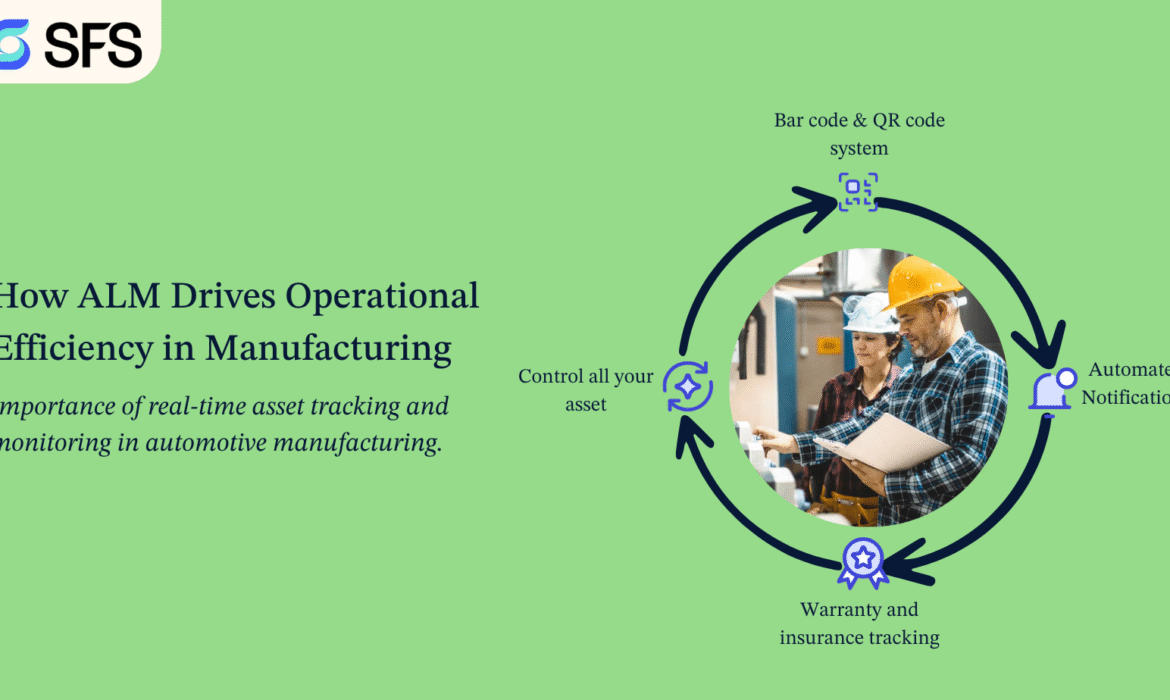
How Asset Lifecycle Management (ALM) Drives Operational Efficiency in Manufacturing.
The automotive business is made up of different companies that oversee creating automobiles and other automotive products, from designing and manufacturing to marketing and selling. This operation is very large overall and needs enough personnel, plant machinery, spare parts, equipment, and facilities. Better known as assets. Asset lifecycle management (ALM) plays a key role in enhancing operational efficiency in automotive manufacturing by managing the entire lifecycle of equipment, machinery, and other assets. Here’s how ALM contributes to operational efficiency in this sector:
- Asset visibility: All assets in the manufacturing facility may be tracked and monitored in real time by ALM systems, giving managers a comprehensive picture of the locations, performance, and conditions of each asset. This helps them make better decisions.
- Forecast Maintenance: ALM systems can forecast when machinery will need maintenance or replacement by evaluating data from equipment sensors. This minimizes the chance of production delays, optimizes maintenance plans, and cuts down on unscheduled downtime.
- Better Resource Allocation: Managers may better allocate resources, optimize production schedules, and balance workloads across machines by using ALM to discover underutilized or overworked assets.
- Extended Asset Lifespan: Frequent maintenance and monitoring extend the life of vital equipment, reducing the need for expensive replacements and raising the machinery’s overall return on investment (ROI).
- Standardized Processes: By enforcing uniform asset management procedures throughout the factory, ALM guarantees uniformity in the use, upkeep, and repair of equipment, leading to more efficient operations.
- Cost Optimization: ALM assists in monitoring each asset’s total cost of ownership (TCO), accounting for acquisition, operating, and maintenance expenses. These guarantees cost effectiveness throughout the asset lifecycle and help manufacturers make better investment choices.
Streamlining automotive production with integrated ALB system.
Using an integrated ALB (Automated Load Balancing) system to streamline automobile production entails minimizing manufacturing bottlenecks, increasing resource efficiency, and streamlining the flow of production operations. An integrated ALB system helps make an automobile production line more efficient in the following ways.
Dynamic Load Distribution: Production workloads are continuously monitored by an integrated ALB system, which also assigns assignments to workstations and machines according to performance and capacity. This keeps some resources from being overloaded while making sure others aren’t underutilized.
Minimizing Bottlenecks: ALB reduces delays or blockages that usually slow down production by automatically balancing the load and rerouting work to parts of the production line with available capacity. Production flows become more consistent and fluid as a result.
Resource Optimization: By balancing workloads in real-time, ALB makes sure that resources (people, robots, machines, etc.) are used effectively, improving productivity and reducing idle time for labour and equipment.
Real-Time Adjustments: To preserve efficiency, the integrated ALB system is made to modify load distribution in real-time to production changes, such as shifts in work complexity, equipment failures, or material shortages.
Reduced Downtime: ALB reduces downtime brought on by overworked or underperforming equipment by proactively distributing the load across the production line, guaranteeing that every station runs at maximum efficiency without needless delays.
Improve Collaboration Between Systems: Integration with other systems, such Manufacturing Execution Systems (MES) or Enterprise Resource Planning (ERP), guarantees that the ALB system is in line with scheduling, logistics, and inventory management, improving the overall coordination of production processes.
Quality Control: By guaranteeing that every workstation has enough time and resources to achieve quality standards, ALB helps sustain greater product quality by minimizing production delays and irregularities in workload distribution.
The importance of real-time asset tracking and monitoring in automotive manufacturing.
The importance of real-time asset tracking and monitoring in automotive manufacturing includes the following key points.
- By reducing downtime and guaranteeing that machines are always ready for production when needed, real-time tracking guarantees that assets are used as efficiently as possible.
- Real-time asset performance monitoring enables predictive maintenance, which lowers unplanned downtime and unexpected breakdowns by enabling early problem discovery.
- Real-time asset tracking guarantees that all assets adhere to safety and industry standards by providing traceability for audits and regulatory compliance.
- By knowing the availability and condition of important assets, real-time data helps improve production schedule planning by cutting down on delays and boosting throughput.
- Based on real-time data, managers are able to make well-informed decisions and modify asset management procedures and production workflows to meet pressing demands.
- Real-time monitoring contributes to cost savings by preventing asset failure and decreasing downtime, which in turn reduces maintenance, repair, and production delays.
- Dynamic resource allocation made possible by real-time data guarantees that resources are allocated to the appropriate tasks according to their availability and performance at any given time.
- Maintaining the quality and consistency of the automotive products being produced requires constant monitoring to make sure assets are operating as expected.
- Real-time tracking of the location and state of tools and equipment improves supply chain efficiency by lowering overstocking and inventory shortages.
- Quick reactions to issues are made possible by immediate asset status visibility, which reduces production interruptions and maintains the manufacturing process’s momentum.
How ALM helps automakers manage machinery, production lines, and vehicles more efficiently.
Because it streamlines operations and promotes smooth integration across the manufacturing lifecycle, Application Lifecycle Management (ALM) is essential for automakers as it improves the effectiveness of controlling equipment, production lines, and automobiles. These are its main advantages:
Management of Machinery and Equipment:
- Maintenance and Monitoring: ALM tools can be used to schedule maintenance, monitor the operation of machinery, and offer insights into possible breakdowns. Automakers are able to reduce downtime and increase overall production by anticipating when machinery requires maintenance through predictive analytics and data management.
- Optimization of Resources: ALM guarantees that assets are used effectively by controlling the lifecycle of machinery, from installation to retirement. This prevents underutilized equipment or overutilized resources, which can result in failures.
Production Line Management:
- Streamlining the Workflow: ALM integrates procedures, hardware, software, and other elements of the manufacturing line. This makes it possible for automakers to guarantee efficient processes, reduce bottlenecks, and prevent production delays.
- Change Management: ALM makes it easier to handle modifications to production lines and equipment. For example, ALM solutions guarantee that updates are applied uniformly throughout the system in the event of a change in production technology or design.
Vehicle Development and Management:
- Design and Prototyping: Vehicle design in the automotive sector is extremely complicated and necessitates the management of substantial volumes of data from test results, engineering specifications, and CAD models. By providing version control, traceability, and communication tools, ALM facilitates process optimization and guarantees that design iterations are efficiently managed.
- Quality Control: ALM incorporates quality control procedures into the manufacturing of automobiles. Automakers can use ALM to track flaws, keep an eye on testing, and guarantee adherence to safety regulations from the development phase to final assembly. This lessens the chance of expensive mistakes or product recalls.
- Software and Embedded Systems: Software and embedded technologies play a major role in modern automobiles. From development to deployment and maintenance, ALM assists automakers in managing the lifetime of in-vehicle software, guaranteeing that security patches and regular upgrades are implemented as required.
End-to-End Traceability: ALM offers complete visibility into all phases of vehicle development and manufacture. This covers monitoring design modifications, sourcing of parts, manufacturing processes, and post-production upkeep. Automakers may enhance decision-making and cut down on delays caused by information silos by connecting data across many teams.
Sustainability and Environmental Impact: ALM assists automakers in tracking how their production processes affect the environment. Automakers can reduce their carbon footprint by optimizing production processes and working towards sustainability goals by gathering data on waste output, emissions, and resource utilization.
Supply Chain Integration: Automakers can better connect their supply chains with the use of ALM solutions. Automobile manufacturers can lower costs, increase components availability, and better adapt to shifting demand by integrating production schedules with suppliers and inventory management systems.
Conclusion: By offering complete management, fostering collaboration, optimizing resource utilization, guaranteeing compliance, and facilitating ongoing improvements throughout the automotive manufacturing process, ALM essentially increases the efficiency of equipment, production lines, and automobiles. It encourages more intelligent decision-making and lowers risks, which eventually results in lower costs and higher-quality products.
End with a clear next step: Are you ready to upgrade your ALM (Asset Lifecycle Management) processes and take your business to new heights? Contact Smart Factory Solutions today and learn how we can tailor it to meet your specific needs. Our team is eager to provide personalized recommendations and demonstrate how our solutions can move your business forward. Contact us now and take the first step toward achieving exceptional quality and customer satisfaction.
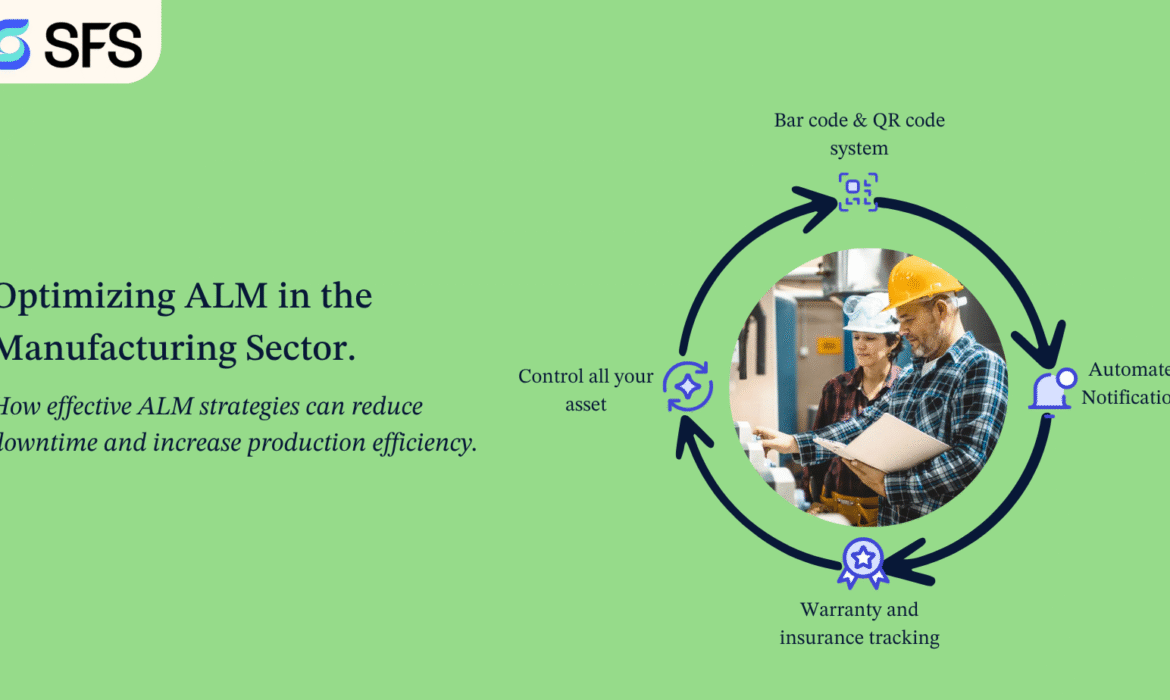
Optimizing Asset Lifecycle Management in the Manufacturing Sector.
In the manufacturing industry, maximizing asset lifecycle management is essential for cutting expenses, increasing productivity, and prolonging the useful life of assets including tools, machinery, and equipment. By ensuring that assets are appropriately maintained, improved, and replaced as necessary, effective management reduces unplanned maintenance and downtime.
- Put Predictive Maintenance into Practice: Real-time monitoring of machine health, performance, and environmental conditions is made possible by the integration of Internet of Things (IoT) devices and sensors on assets. Reactive maintenance can be replaced with a more proactive and economical predictive model by using this data to forecast when a machine is likely to break down or need maintenance.
- Optimize asset utilization: To make sure that equipment is being used effectively, employ asset management software to monitor each asset’s usage. The company may guarantee that the equipment lasts its whole productive life and reduce the cost of capital investments by routinely evaluating the health of its assets and making the best use of them.
- Centralized management of asset data: Put in place a centralized system to store all pertinent assets. Examine the collected asset data to learn more about maintenance patterns, expenses, and asset performance. Utilize this data to plan future asset purchases or retirements, priorities of investments, and optimize the lifecycle.
- Regular training and skill upgradation: Make sure personnel are adequately trained to utilize asset management systems. Staff members with the right training can better spot new problems with assets and streamline their operations. New technologies like artificial intelligence (AI), augmented reality (AR), and drones are emerging as the manufacturing sector develops and can help with asset management. Workers will be able to utilize these tools to their full potential if they invest in ongoing learning.
- Situational Monitoring: Utilize sensors and remote monitoring tools to track asset health in real-time. Condition-based monitoring provides visibility into asset performance, allowing for immediate intervention if certain thresholds are exceeded.
- Costing and Financial Analysis: Assess assets according to their total cost of ownership (TCO), which considers downtime, operating expenses, maintenance expenses, and the initial expenditure. This facilitates improved asset management decision-making by offering a thorough understanding of each asset’s financial impact.
How effective ALM strategies can reduce downtime and increase production efficiency.
Strategies for Asset Lifecycle Management (ALM) are essential for decreasing downtime and boosting production efficiency, particularly in sectors that depend on intricate infrastructure, machinery, and equipment. From asset purchase through operation, maintenance, and decommissioning, asset lifecycle management (ALM) is the key focus. The following are some ways that efficient ALM techniques might result in less downtime and more productive output:
Active Asset Management: ALM enables prompt response through ongoing asset health, performance, and wear monitoring. It assists in setting maintenance and replacement priorities for the most important assets. Proactive management finds possible issues early and fixes them before they become disastrous failures. This minimizes downtime and cuts down on emergency repairs.
Data-Driven Decision Making: Accurate data enables businesses to plan maintenance for the most convenient periods and take care of failing equipment before they affect output. By removing waste and bottlenecks and optimizing asset usage, data-driven decisions assist businesses in increasing overall production efficiency.
Asset Lifetime: By ensuring that assets are maintained in accordance with best practices, ALM methods maximize their longevity and postpone the need for expensive replacements. Assets that receive regular maintenance run more smoothly, using less energy, producing more, and experiencing fewer expensive breakdowns.
Comprehensive Maintenance Plan: To minimize production disturbance, effective ALM guarantees that maintenance schedules are meticulously planned and carried out. Because they eliminate the need for unscheduled maintenance, well-planned maintenance schedules provide predictable and minimal downtime for repairs.
Inventory Optimization: By keeping track of equipment inventories and spare parts, ALM makes sure that the required parts are on hand when needed. To avoid delays in repairs or replacements, it interfaces with supply chain systems. Downtime is decreased when the appropriate parts are available when needed, cutting down on waiting times.
Compliance: Regulatory compliance reduces the risk of disruptions caused by legal or safety issues, ensuring uninterrupted production. Maintaining compliance and reducing hazards improves overall efficiency and prevents needless disruptions by reducing shutdowns and safety-related problems.
The role of reductive in extending asset life in a manufacturing environment.
The role of reductive maintenance (often referred to as preventive maintenance or condition-based maintenance) in extending asset life in a manufacturing environment can be outlined in the following key points:
- Reductive maintenance involves regularly inspecting and monitoring the condition of assets to identify signs of wear and tear. Early identification of potential issues prevents excessive wear, allowing for timely repairs or replacements, extending the life of assets.
- Reductive maintenance reduces the likelihood of catastrophic failures by solving minor problems before they become serious. By preventing serious breakdowns, the asset’s lifetime can be shortened, reducing the likelihood of irreversible damage.
- Assets that are well-maintained have less stress and wear and tear, which extends their lifespan and improves their overall functionality.
- Energy consumption and operational inefficiencies are decreased by well-maintained equipment. Effective operation lengthens the equipment’s lifespan, lessens the strain on machinery, and lowers the possibility of overuse.
- Equipment reliability is increased through routine inspections and planned repairs, which reduce unscheduled downtime. Assets that are consistently dependable endure longer operating lives because they are subject to less stressors and disturbances.
- Early detection and correction of underperformance problems stops additional deterioration and supports the equipment’s long-term health.
- Decreased dependence on urgent fixes aids in preventing the kind of damage that can reduce an asset’s lifespan.
- Maintaining the availability & production readiness of assets is facilitated by routine maintenance. Better utilization and less idle time result from increased availability, and consistent, regular use under ideal circumstances extends asset life.
- Preventing the failure of critical parts ensures that equipment continues operating without long interruptions, which could otherwise accelerate deterioration.
- Employees with proper training are better able to manage equipment ethically, minimizing abuse and prolonging asset life.
Leveraging ALM to improve factory performance and reduce operational costs.
The following crucial elements are included in using Asset Lifecycle Management (ALM) to increase industrial productivity and reduce operating costs:
- Throughout an asset’s lifecycle, monitor and control its performance to guarantee optimal effectiveness and avoid underutilization.
- Reduce unplanned downtime and maintenance expenses by using data to forecast when assets may fail.
- ALM reduces unnecessary spending by enhancing the timing of asset replacement, upgrades, and repairs.
- Find underperforming assets and make effective reallocations to maximize the use of both people and material resources.
- Regular monitoring and maintenance improve asset longevity, delaying the need for costly replacements.
- ALM solutions offer comprehensive insights into asset performance, facilitating data-driven choices that lower expenses and boost productivity.
- Ensure assets comply with industry standards and safety regulations, reducing the risk of costly fines and accidents.
- Lower energy expenses result from monitoring factory asset energy consumption and cutting waste.
- Reduce surplus stock and related expenses while optimizing spare component inventory to guarantee availability.
- Processes are streamlined when ALM is combined with automation tools, increasing industrial output while lowering the expense of manual intervention.
Conclusion: In the manufacturing industry, optimizing asset lifecycle management necessitates a blend of data-driven tactics, sophisticated technologies, and knowledgeable staff. Manufacturers can attain long-term asset value, cost effectiveness, and operational excellence by emphasizing sustainability, predictive maintenance, and system integration.
End with a clear next step: Are you ready to upgrade your ALM (Asset Lifecycle Management) processes and take your business to new heights? Contact Smart Factory Solutions today and learn how we can tailor it to meet your specific needs. Our team is eager to provide personalized recommendations and demonstrate how our solutions can move your business forward. Contact us now and take the first step toward achieving exceptional quality and customer satisfaction.


