
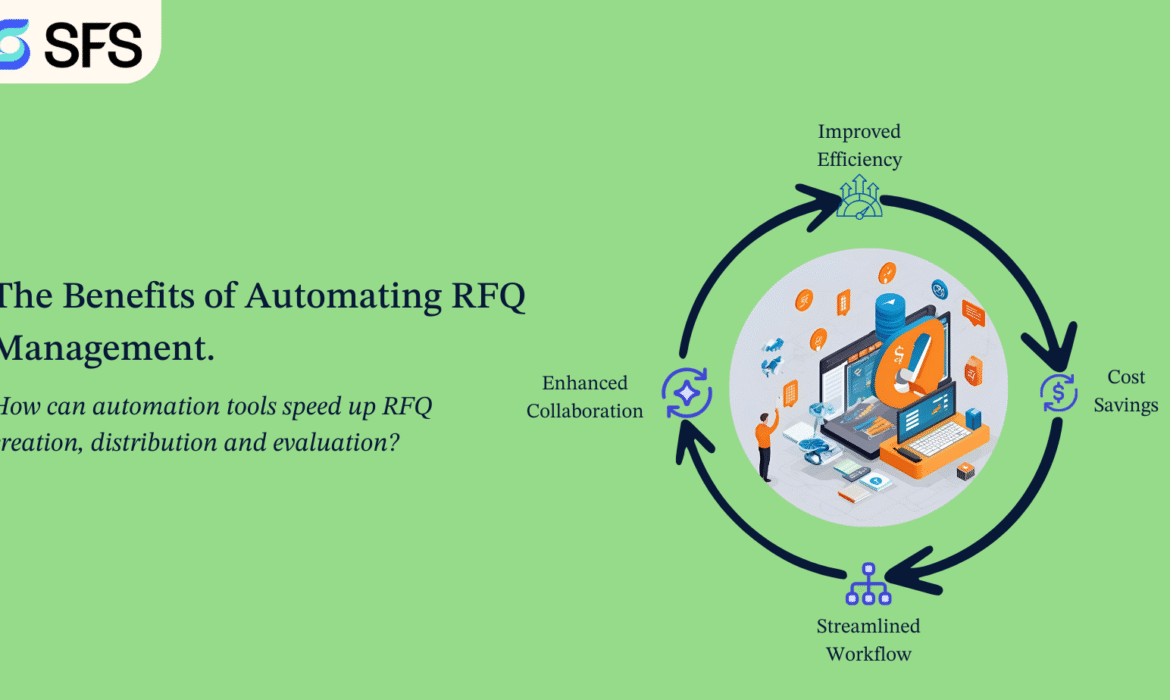
The Benefits of Automating RFQ Management.
Introduction: Effective procurement procedures are essential for preserving cost control, guaranteeing quality and cultivating solid supplier relationships in the cutthroat business environment of today. Request for Quote (RFQ) software is one effective technique that can greatly improve your procurement approach. We’ll go over what RFQ software is, its main benefit and how automation tools can speed up RFQ creation, distribution and evaluation in this blog post.
The Benefits of Automating RFQ Management: RFQ management has historically been a manual procedure that is frequently prone to mistakes, inefficiencies and communication snags. Automating RFQ management presents several benefits that can significantly enhance procurement operations.
- Improved Efficiency: By doing away with human processes like data input, document processing and communication tracking, automation expedites the RFQ process. The time needed to gather and compare quotations can be greatly decreased by using automated systems that can create and submit Smart RFQs to several vendors at once.
- Enhanced Collaboration: Improved supplier relationship management and communication are made possible by automated Smart RFQ platforms. Digital bids, submission tracking and real-time updates are all available to suppliers. This promotes openness and improves cooperation between vendors and procurement teams.
- Better accuracy and fewer errors: Errors in data entry, pricing computations and supplier responses are frequently the result of manual RFQ administration. By standardising formats, guaranteeing consistency in data capture and automatically identifying inconsistencies or missing information, automation reduces these risks.
- Cost Savings: Automation lowers RFQ management expenses by decreasing manual labour, operational inefficiencies and errors. Furthermore, procurement teams can make better financial judgements by swiftly identifying the most affordable supplier possibilities thanks to computerised comparison tools.
- Data-Driven Decisions: Procurement teams can get useful information and insights with automated RFQ solutions. These technologies facilitate improved forecasting, strategic sourcing and well-informed decision-making by tracking supplier performance, pricing trends and historical data.
- Enhanced Security and Data Protection: Secure platforms for handling private procurement data are offered by automated systems. Businesses can protect their procurement procedures from data breaches and unwanted access by using features like encrypted communications, role-based access control and secure storage.
Case studies on how organizations benefit from automating RFQ software?
It was difficult to swiftly create precise cost models for a business with a variety of manufacturing processes. The business reduced variability and ensured consistent, accurate cost models by automating their quoting process with RFQ cost modelling software. They were able to provide bids faster thanks to this automation, which improved client satisfaction and operational effectiveness.
Outcomes: Manual processes, errors and delayed responses cost you time and money. Smart RFQ is the solution!
- 48% Faster RFQ Processing – Automate workflows and eliminate delays.
- 77% Accuracy – Reduce human errors with a centralized digital system.
- 32% Cost Savings – Optimize supplier selection and price negotiations.
- Real-time Collaboration – Connect with suppliers seamlessly for quick decision-making.
How can automation tools speed up RFQ creation, distribution and evaluation?
Automation tools can significantly speed up the Request for Quotation (RFQ) process by streamlining creation, distribution and evaluation. Here’s how:
- RFQ Creation: Pre-configured templates can be used by automation tools to generate RFQs, saving manual labour and guaranteeing consistency. AI can reduce errors and save time by automatically filling in fields based on previous RFQs. Additionally, tools can remove duplication of effort by immediately pulling pertinent data (such as item specs, quantities, and supplier history) from corporate system.
- RFQ Distribution: To cut down on manual follow-ups, RFQs can be automatically distributed to numerous suppliers via email or supplier portals. Supplier answers are guaranteed on time thanks to automated follow-up emails and deadline reminders. Based on availability, pricing patterns and historical performance, this system can suggest or automatically choose vendors.
- RFQ Evaluation: Based on factors including pricing, delivery time, quality ratings and historical performance, this application may automatically compare provider responses. Additionally, AI can rate offers according to weighted criteria, assisting procurement teams in making data-driven decisions more quickly. Additionally, a centralised platform allows stakeholders to examine and approve proposals, eliminating the back-and-forth email delays. Automation keeps a digital log of every RFQ activity, ensuring compliance.
Conclusion: Procurement operations are transformed by automating RFQ management, which increases cost-effectiveness, accuracy and efficiency. By improving supplier relationships, guaranteeing compliance and making data-driven procurement decisions, companies that implement automated solutions obtain a competitive advantage. Procurement teams should think about automating RFQ management as a strategic step to improve productivity and propel business performance as digital revolution continues to disrupt industries.
End with a clear next step: Are you ready to upgrade your RFQ Management processes and take your business to new heights? Contact Smart Factory Solutions today and learn how we can be tailored to meet your specific needs. Our team is eager to provide personalized recommendations and demonstrate how our solutions can move your business forward. Contact us now and take the first step toward achieving exceptional quality and customer satisfaction.

How to Select the Right Vendor through Effective RFQ Evaluation?
Introduction: Effective procurement procedures are crucial to preserving cost control, ensuring quality, and fostering strong supplier relationships in the competitive corporate world of today. Software for requesting quotes (RFQs) is a useful tool that can greatly enhance your procurement strategy. In this blog post, we’ll go over how to evaluate RFQs effectively, what makes them great, and how to compare vendor responses to RFQs to choose the best vendor. And we will learn how we can achieve 77% accuracy and save 45% more time than before.
Right Vendor through Effective RFQ Evaluation: Selecting the right vendor through an effective RFQ (Request for Quote) evaluation is a critical process to ensure quality, cost-effectiveness, and long-term success. Let me break it down into a simple, actionable process:
Define clear evaluation criteria:
Before you send the RFQ:
- Technical Specifications: Ensure your requirements are detailed and unambiguous.
- Quality Standards: Certifications, quality processes, testing standards.
- Delivery Timeline: Lead times, flexibility, penalty clauses.
- Pricing Structure: Total cost, payment terms, hidden costs.
- Service & Support: Post-sale support, warranty, training, customer service.
- Vendor Capabilities: Capacity, scalability, financial stability.
- Compliance & Legal: Regulatory, contractual, and ethical compliance.
Develop a Scoring System:
- Assign weightage to each criterion (e.g. price 30%, quality 25%, delivery 15%, etc.).
- Use a scoring matrix to objectively compare vendor responses.
Conduct Vendor Due Diligence:
- Reference Checks: Talk to their existing clients.
- Site Audits: Visit manufacturing sites, warehouses, or offices.
- Financial Review: Review their financial health, credit rating.
- Legal Review: Verify licenses, insurance, legal disputes.
Clarify and Negotiate:
- Conduct clarification rounds if needed to resolve ambiguities.
- Negotiate based on RFQ responses, but focus on total value, not just price.
- Risks identified and mitigated.
Case studies on how to select the right vendor through effective RFQ evaluation?
Challenge: To fulfil the growing demand for output, a manufacturing company had to acquire a new CNC machining centre. The vendor had to be carefully chosen because the investment was substantial (around $1 million).
Smart RFQ Solution: With smart RFQ software, this company does detail RFQ preparation and vendor screening. This is followed by vendor presentations and site visits. Then the company begins final evaluation and negotiations.
Outcomes: The company saved a huge amount of time by completing all the processes with the RFQ tool.
- 77% Accuracy – Reduce human errors with a centralized digital system.
- 54% Seamless RFQ Creation – RFQ Creation.
- 45% Saved Time – Saved a huge amount of time by completing all the processes.
- Seamless Collaboration across teams.
Key features to consider RFQ evaluation.
The thoughtfully crafted features of RFQ software are what give it its potency. It is essential for procurement teams for the following reasons:
- Seamless RFQ Creation.
- Automated Task Reminders.
- Centralized Supplier Information.
- File Upload and Addendum Support.
- Secure Quote Privacy.
- Advanced Reporting.
Conclusion: Effective RFQ evaluation is not just about selecting the cheapest vendor, but about choosing the partner that offers the best overall value while minimizing risks. By following a structured, transparent, and criteria-driven process, organizations can make well-informed decisions that lead to long-term success, stronger vendor relationships, and better project outcomes.
End with a clear next step: Are you ready to upgrade your RFQ Management processes and take your business to new heights? Contact Smart Factory Solutions today and learn how we can be tailored to meet your specific needs. Our team is eager to provide personalized recommendations and demonstrate how our solutions can move your business forward. Contact us now and take the first step toward achieving exceptional quality and customer satisfaction.
How to Write an Effective RFQ: Tips and Best Practices?
Effective procurement procedures are essential for preserving cost control, guaranteeing quality and cultivating solid supplier relationships in the cutthroat corporate environment of today. Request for Quote (RFQ) software is one effective technique that can greatly improve your procurement approach. We’ll learn how to write an effective RFQ in this blog post. We’ll also go over tips and best practices in this blog post.
Tips and Best Practices for Writing Effective RFQs: To get precise and competitive quotations from suppliers, make sure you get the most for your money and reduce misunderstandings, it is essential to write an efficient Request for Quotation (RFQ). The following advice and best practices will help you write an extensive and successful RFQ:
- Describe exactly what goods, services, or labour you require. Inaccurate bids result from vague descriptions. Provide explicit requirements, amounts and anticipated results.
- To prevent misunderstandings, use industry-standard phrasing when requesting technical specifications. This will make it clearer to possible vendors what you need.
- List materials, dimensions, sizes, models and other important details. And list any non-negotiable requirements that bidders must meet to be considered.
- Give a thorough explanation of any quality requirements you may have (such as certifications or regulatory compliance).
- Include any performance expectations, warranties, or guarantees for the product or service.
- Establish precise delivery and deadline expectations, including the due date for RFQ submission, the anticipated date of delivery or completion and any interim checkpoints or milestones.
- Clarify payment expectations, such as deposit requirements, milestones, or payment on delivery.
- Provide information on whether taxes or other fees are included in the price or will be added separately, as well as the currency in which the quote should be made.
- Ask for details about the bidder’s company, including references, financial soundness, certifications and licenses.
- Describe the fundamental conditions that will control the supplier relationship, such as non-disclosure agreements (NDAs), confidentiality agreements and intellectual property rights.
What are the common features of an RFQ software?
Request for Quotation (RFQ) software automates and manages RFQs, which helps to expedite the procurement process. Typical RFQ software features include:
Seamless RFQ Creation:
- Enables users to use common formats to swiftly construct RFQs.
- Generate detailed RFQs effortlessly, saving time and ensuring accuracy.
- Companies can modify RFQs to add fields such product descriptions, quantities, terms of delivery and cost information.
- Permits procurement teams to simultaneously draft several RFQs for various goods or vendors.
Centralized Supplier Information:
- Keeps track of approved vendors’ contact information, performance history and pricing information.
- Based on preset parameters, the system can automatically submit RFQs to chosen vendors.
- Manage supplier data in one centralized platform for streamlined communication.
- Allows suppliers to log in, view RFQs and submit their bids directly.
Bid Collection & Evaluation:
- For ease of comparison, all supplier responses are gathered in one location.
- Predetermined evaluation criteria, such as cost, delivery time and quality, can be used by the software to provide ratings.
- To make well-informed selections, users can compare quotes from several suppliers at once.
- Smart RFQ lets us easily collect and evaluate bids.
Secure Quote Privacy:
- Through role-based access guarantees, only permitted individuals can view specific RFQs or supplier data.
- Protect sensitive information with secure login and access controls.
- assists companies in adhering to industry-specific compliance requirements including SOX, GDPR and ISO.
- Shields private procurement information from breaches or illegal access.
Automated Task Reminders:
- Ensures adherence to corporate policies by automating the internal approval process for smart RFQs.
- Stay on top of critical smart RFQ tasks and deadlines with automated reminders.
- Notifies internal teams and suppliers of impending approvals, deadlines and next steps.
- Guarantees a smooth transition from smart RFQ to the creation of purchase orders.
Advanced Reporting:
- Gives information about smart RFQ status, bidding patterns and supplier performance.
- Gain valuable insights from comprehensive reports, enabling data-driven decision-making.
- Aids companies in forecasting future procurement prices and analysing previous quotes.
- Uses historical bids, fulfilment rates and compliance to track a supplier’s dependability.
The essential components of a well-crafted RFQ: specifications, deadlines and requirements.
Having a well-written Request for Quotation (RFQ) is essential to getting precise and competitive quotes from vendors. All the information required for prospective vendors to comprehend the scope of work and reply suitably should be included in the RFQ. The following are the necessary elements to incorporate:
Specifications: Include a clear, comprehensive description of the goods or services needed. Describe any required performance criteria (e.g., durability, speed, energy efficiency). Specify any required industry standards or certifications (for example, ISO certification, safety regulations, environmental compliance).
Deadlines: For vendors to comprehend the timeframe they must work within, clear deadlines are necessary. This enables vendors to allocate their resources appropriately and helps guarantee on-time delivery. You must obtain all vendor responses by a certain date and time. This allows suppliers ample time to get their bids ready. For larger projects, provide interim deadlines for key deliverables or phases, so vendors know what’s expected along the way.
Requirements: The qualifications, deliverables and terms of the contract that you expect from vendors are described in this section. Give vendors instructions on how to break down their prices (e.g., itemised costs, project cost, per unit). Make it clear whether shipping, taxes and other expenses should be included or not. If there are any standard terms or conditions you expect vendors to adhere to, include them here. This may include confidentiality agreements, intellectual property considerations, or compliance with legal and regulatory requirements.
Conclusion: RFQ software is a potent instrument that can revolutionise your procurement procedure by improving accuracy, efficiency and teamwork. You can save a lot of money and improve your supplier relationships by selecting the appropriate software and putting it into practice well. With RFQ software, embrace the procurement of the future and set up your company for success in the cutthroat market of today. The advantages of using RFQ software greatly exceed the initial cost, although it does require careful design, training and continuous optimisation.
End with a clear next step: Are you ready to upgrade your RFQ management processes and take your business to new heights? Contact Smart Factory Solutions today and learn how we can be tailored to meet your specific needs. Our team is eager to provide personalized recommendations and demonstrate how our solutions can move your business forward. Contact us now and take the first step toward achieving exceptional quality and customer satisfaction.
What is RFQ Management? A Comprehensive Introduction for Beginners.
What is RFQ:
A formal document known as an RFQ (Request for Quotation) is sent by a buyer to several suppliers to request conditions and prices for goods or services. Usually, it contains comprehensive details about the things required, including quantity, specs, and delivery requirements. When suppliers reply with quotes, the buyer reviews them to determine which is the best deal. In businesses where goods or services are standardised, RFQs are frequently utilised since they facilitate direct quotation comparison.
What is RFQ Management:
The process of planning, sending, receiving and evaluating RFQs to guarantee effective procurement is known as RFQ management. There are multiple important processes involved:
- Clearly defining the products or services needed.
- Preparation of RFQ document, including specifications, quantities, deadlines and terms.
- Selecting the vendors to whom the RFQ should be sent, considering criteria such as prior performance and dependability.
- Sending the document to suppliers, usually via email or procurement software.
- Reviewing the responses from suppliers and comparing prices, terms and conditions.
- Choosing the supplier that offers the best value, considering cost, quality and delivery terms.
An overview of RFQ management and its importance in the procurement process.
Overview of RFQ management:
When requesting quotes from suppliers or contractors for goods or services with standardised specifications or those that are manufactured in large quantities, a competitive bid document known as an RFQ is utilised. An effective RFQ document includes the following elements:
- Product/Service Description: Specifications of the required item in detail.
- Quantity: The number of units required
- Delivery Schedule: Anticipated delivery schedules and dates.
- Terms and Conditions: Conditions, warranty information and terms of payment.
- Submission Deadline: A clear deadline for suppliers to submit their quotes.
Importance in the procurement process:
RFQ management offers several importance to organizations:
- Businesses can select the most competitive cost by comparing several bids.
- Streamlined processes reduce the time spent on procurement.
- Guarantees equitable competition and transparent record-keeping of procurement choices.
- Helps identify reliable suppliers and build long-term partnerships.
- Lowers the chance of supplier problems and guarantees adherence to procurement regulations.
How Smart RFQ management helps streamline the process of acquiring goods or services.
By offering a methodical and effective approach to vendor selection and procurement, Request for Quotation (RFQ) management is essential to speeding up obtaining products or services. This is how it’s beneficial:
- Communication in One Place: All correspondence with possible suppliers is centralised and standardised thanks to Smart RFQ management. This makes it easier to compare responses, guarantees that all vendors receive the same information and lowers the possibility of misunderstandings.
- Time Efficiency: Automating repetitive operations like creating RFQs, submitting them to suppliers and monitoring responses is possible with RFQ management tools or systems. This guarantees prompt decision-making, expedites the procurement cycle and decreases manual labour.
- Enhanced Vendor Comparison: An RFQ standardizes the format in which vendors submit their proposals, making it easier to compare costs, timelines and terms. This allows procurement teams to make data-driven decisions based on consistent and comparable metrics.
- Cost Savings: By soliciting quotes from multiple suppliers, RFQ management promotes competition among vendors, often leading to more competitive pricing. Additionally, clear specifications minimize the likelihood of costly misunderstandings or errors.
- Enhanced Adherence: Features that guarantee adherence to both internal and external regulations are frequently included in RFQ management systems. This lowers the possibility of legal problems and guarantees that procurement is in line with corporate objectives.
- Transparency: A transparent audit trail is produced by tracking and storing every interaction and document involved in the RFQ process. This improves accountability and transparency, which facilitates decision-making and dispute resolution.
- Customization and Specificity: RFQ management allows buyers to define their exact requirements in detail, such as product specifications, delivery schedules, and service terms. This reduces ambiguity, ensuring suppliers understand and meet the buyer’s needs.
- Supplier Management: An RFQ process helps identify reliable vendors through a structured evaluation process. Over time, this fosters strong supplier relationships, improving quality, reliability, and collaboration.
- Scalability: It gets more and harder to manually manage RFQs as businesses expand. Large amounts of requests, suppliers and responses can be handled using RFQ management platforms or systems, guaranteeing scalability without sacrificing effectiveness.
The key stages of Smart RFQ management: Preparation, Submission, Evaluation and Selection
The four main steps of the RFQ (Request for Quotation) management process are Preparation, Submission, Evaluation and Selection. Below is a summary of every step:
Preparation: This phase establishes the framework for the RFQ procedure. Important actions consist of:
- Give a clear description of the project’s or procurement’s deliverables, specifications and scope.
- Make a thorough RFQ that includes terms, conditions, deadlines and technical details.
- Look into and narrow down the list of suppliers or vendors who can fulfil the requirements.
- Establish objective criteria to assess vendor responses, such as pricing, quality, experience and compliance.
- Provide deadlines and make submission instructions clear.
Submission: The RFQ is sent out at this point and vendors are ready to submit their answers. Among the activities are:
- Make sure the selected vendors receive all pertinent information when you send them the RFQ.
- Provide a platform for vendors to ask questions and receive clarifications.
- Gather answers within the allotted time, making sure they follow the guidelines for submission.
Evaluation: Here, the emphasis is on evaluating and contrasting the answers using predetermined standards. Among the steps are:
- Verify that each submission complies with the RFQ requirements and is complete.
- Compare costs, payment terms and delivery schedules.
- Examine the vendor’s credentials, track record and experience.
- Identify vendors that meet or exceed the evaluation criteria.
Selection: Selecting the best vendor and completing the contract are the last steps. Important actions consist of:
- Clarify and negotiate terms, if necessary, to ensure mutual agreement.
- Send the purchase order or contract to the chosen vendor after notifying them.
- Notify unsuccessful vendors of the decision while preserving openness and goodwill.
- Keep all records in an archive for audits and future use.
Conclusion: An essential component of any company’s buying strategy is RFQ management. Organisations may maximise their purchasing activities, negotiate better prices and forge closer bonds with suppliers by effectively managing the process. Understanding RFQ management can help you guarantee that you receive the greatest value for your money while preserving seamless operations and reducing risks, regardless of whether you run a small business or are a part of a larger organisation.
End with a clear next step: Are you ready to upgrade your RFQ Management processes and take your business to new heights? Contact Smart Factory Solutions today and learn how we can be tailored to meet your specific needs. Our team is eager to provide personalized recommendations and demonstrate how our solutions can move your business forward. Contact us now and take the first step toward achieving exceptional quality and customer satisfaction.
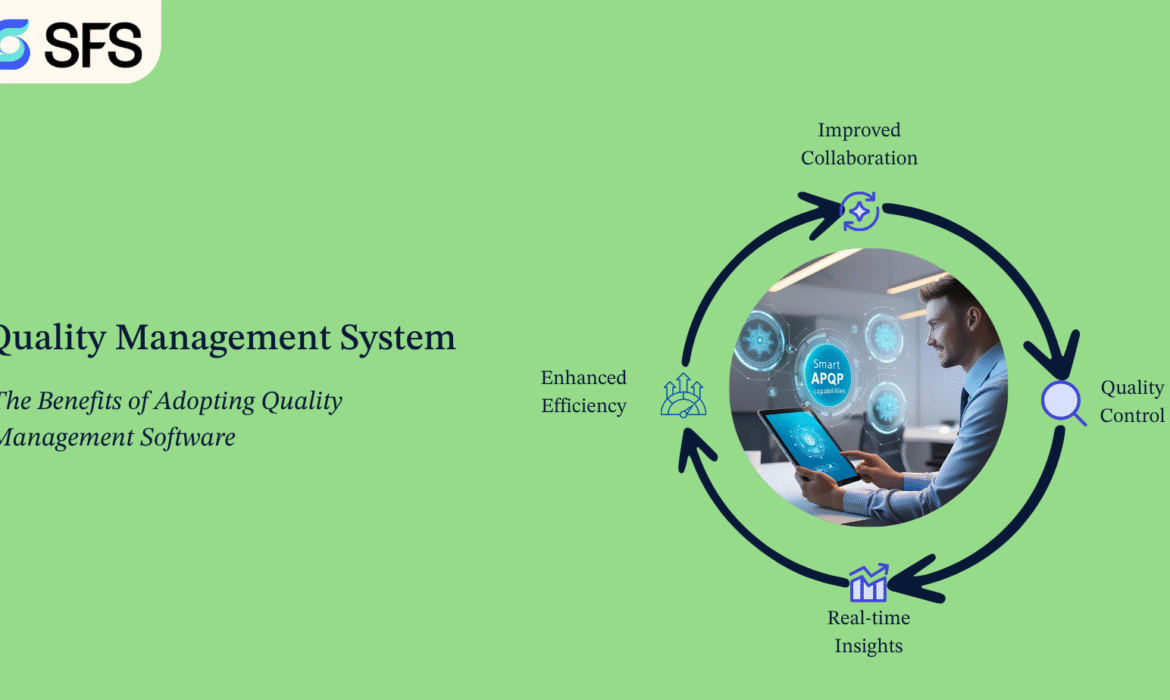
Quality Management System: Solutions Which Are Build For Future
In today’s competitive landscape, product quality, and customer satisfaction are necessary for any business striving for excellence. White traditional quality management systems often fall short due to inefficiencies and fragmented processes that hinder progress. Quality management systems fill the vacuum with their cutting-edge features.
What is a Quality Management Solution?
A Quality Management Solution is a comprehensive system or software designed to oversee and improve the quality of an organization’s processes, products, and services. It comes with a set of tools, methodologies, and best practices that ensure consistent quality, compliance with industry standards, and continuous improvement within an organization.
These solutions are tailored for business leaders seeking robust, integrated tools. Quality management software easily blends advanced methodologies with user-friendly features to drive your projects toward success.
The Benefits of Adopting Quality Management Software
Implementing quality management solutions offers a multitude of advantages that extend beyond mere compliance. Here’s how your business can thrive with this comprehensive quality management system:
1. Enhanced Efficiency
Streamline your workflows with automated processes that reduce manual effort and eliminate redundancies. Quality management solution maximizes productivity, allowing your team to focus on what truly matters—innovating and delivering exceptional products.
2. Improved Collaboration
Facilitate seamless communication across departments and teams. With these solutions, everyone stays aligned, fostering a collaborative environment that accelerates project timelines and enhances overall performance.
3. Superior Quality Control
Mitigate risks and ensure product reliability through integrated Failure Modes and Effects Analysis (FMEA) and Production Part Approval Process (PPAP). Proactive risk management translates to higher-quality products and increased customer trust.
4. Time Savings
Accelerate your project timelines with ready-to-use templates and automated notifications. These solutions help you meet deadlines consistently, ensuring timely delivery without compromising on quality.
5. Regulatory Compliance
Stay ahead of industry standards and regulations with built-in compliance features. Quality management software ensures that your processes are always aligned with the latest requirements, avoiding costly compliance issues.
6. Real-Time Insights
Gain actionable insights into project progress and resource utilization with advanced reporting and analytics tools. Make informed decisions swiftly, backed by accurate and up-to-date data.
Features of Quality Management Systems
Quality management software is packed with features meticulously designed to address the multifaceted challenges of quality management:
●Integrated FMEA and PPAP
Seamlessly combine FMEA and PPAP with Process Flow and Control Plans. This integration ensures streamlined product development, robust documentation, and unwavering compliance with industry standards.
● Project Planning and Control
Effectively manage new product development projects through streamlined resource allocation and enhanced risk management. These solutions simplify timeline tracking, keeping your projects on course and within scope.
● APQP Status Reporting and Revision Management
Track project phases, milestones, and overall progress with customizable status reporting templates. Maintain version control and simplify change management with efficient revision management tools.
● Automation for Efficiency
Automate the generation of FMEA analyses and PPAP documentation. Reduce manual effort, minimize errors, and ensure consistency across all project documentation.
● Reporting and Analytics
Utilize advanced reporting tools to generate performance metrics, monitor progress, and ensure compliance documentation is accurate and accessible. Real-time analytics empower you to optimize your processes continuously.
● Enhanced Risk Mitigation
Identify potential failure modes and establish proactive control plans with integrated FMEA and Control Plan capabilities. Quality management software enables effective risk mitigation, reducing errors and enhancing product reliability.
● Ready-to-Use APQP Templates
Accelerate your project timelines with pre-designed templates that are easy to implement within your manufacturing workflows. Save time and ensure consistency across all projects.
● Seamless Integration
Integrate quality management software with your existing systems to create a unified New Product Development (NPD) ecosystem. Enhance data flow and ensure all your tools work in harmony.
Conclusion
In an era where quality and efficiency define business success, these solutions offer the ultimate solution for forward-thinking companies. By integrating essential quality management processes with intuitive project management tools, organizations can deliver superior products, exceed customer expectations, and maintain a competitive edge in the market.
Take the Next Step Toward Excellence
Ready to elevate your quality management processes and drive your business to new heights? Reach out to Smart Factory Solutions today to discover how SmartAPQP can be tailored to meet your specific needs. Our team is eager to provide personalized recommendations and demonstrate how our solutions can propel your business forward. Contact us now and take the first step towards achieving exceptional quality and customer satisfaction.

Understanding the fundamentals of APQP: How QMS (quality management system) software helps the manufacturing industry.
APQP (Advanced Product Quality Planning) is a structured methodology used in manufacturing industries, aimed at ensuring that a product meets customer expectations and quality standards, from the design stage through to production. It is widely used in automotive, aerospace and other sectors that prioritize high-quality production processes. In this blog post, we will explore APQP software in detail, explain its benefits, and why it is becoming an indispensable asset for the manufacturing industry.
Here is a fundamental introduction to APQP:
Introduction of APQP:
APQP is a structured framework that defines the processes and stages involved in product development, with an emphasis on quality planning. Its purpose is to ensure the product meets customer requirements and specifications while being produced efficiently, reliably, and safely.
Key Objectives of APQP:
- Make sure the product suits the customer’s needs and requirements.
- Proactively identify and address potential threats in design, production and assembly.
- Establish standardized processes to maintain high product quality.
- Regularly review and improve product and process quality through feedback and analysis.
Tools and Techniques Used in APQP:
FMEA (Failure Modes and Effects Analysis): A structured approach to identifying potential risks during both the design (DFMEA) and production (PFMEA) phases.
Control Schemes: A document that describes the methods, parameters, and procedures used to maintain product quality during production.
Process Flow Chart: Visual representation of the steps of the manufacturing process.
Design Reviews: Analysis is carried out at various stages of design to ensure that the product meets the customer’s needs and requirements.
Advantage of APQP:
- By methodically addressing potential risks and prioritizing customer requirements, APQP enhances the overall quality of products.
- Decrease the chances of defects and costly rework by identifying issues early in the design and production process.
- With a structured process, product development becomes more efficient, helping companies get products to market faster.
- By consistently fulfilling customer requirements, companies establish trust and foster long-term partnerships.
How QMS helps the manufacturing industry:
Increase product quality: QMS software streamlines quality control procedures across various departments and production lines, guaranteeing uniform quality in all products. This software also makes it possible to track production data in real-time, detect any discrepancies in quality standards, and take quick corrective measures.
Enhanced Compliance and Regulatory Perseverance: QMS software helps manufacturers comply with industry-specific regulations such as ISO 9001, FDA guidelines (for pharmaceuticals), or IATF 16949 (for automotive). It ensures that all quality management processes are properly documented and easily auditable and QMS software automates the creation of reports for regulatory compliance, reducing manual effort and ensuring that reports are accurate and up to date.
Systematic quality audits and inspections: QMS software facilitates efficient scheduling and monitoring of internal and external audits. It also aids in managing audit results and ensures timely follow-up actions are implemented. Here manufacturers can set up digital inspection checklists to ensure that every part or product meets quality standards. This reduces errors caused by manual inspection processes.
Decrease costs and waste: QMS software helps minimize scrap rates, rework, and warranty claims by detecting and addressing quality issues early in the production process, leading to cost savings. The software can streamline resource allocation for quality control activities, ensuring optimal use of materials, equipment, and labor. This reduces waste and unnecessary expenses.
Advanced Collaboration and Communication: QMS software enhances communication and collaboration across departments like production, quality assurance, engineering, and procurement by offering a unified platform for quality data and documents. Some QMS solutions extend to suppliers, allowing manufacturers to manage and track the quality of incoming raw materials or components, ensuring they meet required standards before they are used in production.
Conclusion: Both APQP and QMS play a vital role in the manufacturing industry. Quality Management System (QMS) software is an essential tool for contemporary manufacturing industries. It simplifies and automates quality control processes, enhances product quality, ensures compliance with regulations, and promotes ongoing improvement. By offering real-time data, facilitating collaboration, and minimizing risks, QMS software boosts efficiency, lowers costs, and increases customer satisfaction, making it a crucial asset for businesses seeking to stay competitive in the current market.
End with a clear next step: Are you ready to upgrade your quality management processes and take your business to new heights? Contact Smart Factory Solutions today and learn how we can be tailored to meet your specific needs. Our team is eager to provide personalized recommendations and demonstrate how our solutions can move your business forward. Contact us now and take the first step toward achieving exceptional quality and customer satisfaction.
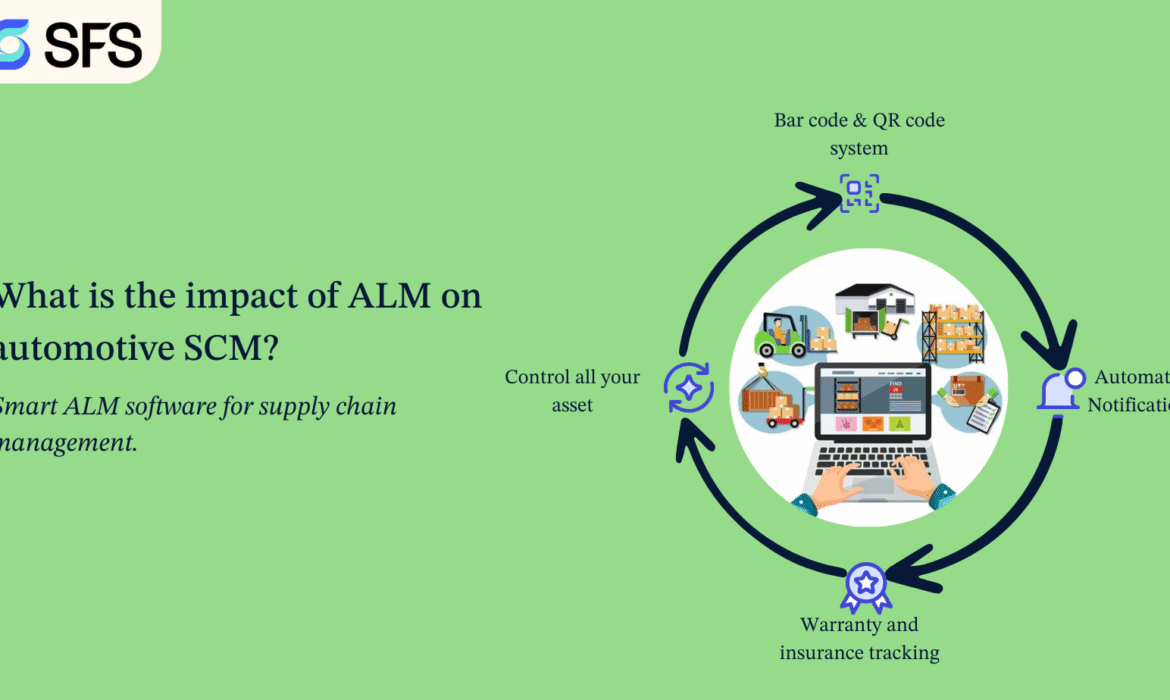
What is the impact of ALM on automotive supply chain management?
Introduction: Businesses in a wide range of sectors rely significantly on a range of resources to function effectively and stay competitive in the ever-changing business environment of today. Organisations use asset lifecycle management (ALM) techniques to guarantee compliance, cost effectiveness and peak performance. This blog post will discuss the impact of ALM on automotive supply chain management, as well as how downtime can be reduced by up to 23% and maintenance costs can be reduced by up to 33%.
Impact of ALM on automotive supply chain management: By guaranteeing the effective use of assets throughout their existence, asset lifecycle management or ALM, is essential to improving automotive supply chain management (SCM). The following are some ways that ALM affects SCM in the automotive sector:
- Take control of all your assets with Smart ALM’s extensive management features during their whole lifecycle.
- Smart ALM assists in monitoring and controlling the use of vital resources (such as fleets, tools and machinery) to avoid overuse or underuse.
- To identify assets and retrieve their complete maintenance, warranty and repair history, Smart ALM employs a barcode and QR code technology.
- Predictive and preventative maintenance are made possible by ALM implementation, which lowers unplanned breakdowns. This improves supply chain dependability, reduces manufacturing delays and lowers repair costs.
- ALM reduces capital expenditures on new equipment by prolonging asset lifespans through efficient maintenance.
- Government rules pertaining to waste management, emissions and car production are better followed.
- Software-driven systems are a major component of modern cars. Reliability is increased by ALM’s smooth integration of hardware and software components across various supplier tiers.
- Better supply chain resilience results from ALM’s reduction of time-to-market and management of manufacturing costs through increased transparency, automation and efficiency in development and logistics.
- Every component, software module and requirement can be traced throughout its lifecycle thanks to ALM’s end-to-end traceability. This facilitates defect monitoring and expedites the settlement of issues.
- Your assets’ warranties and insurance are tracked by Smart ALM, which also assists in managing coverage information, expiration dates and decisions regarding claims or renewals.
Case study on how organizations benefit from Smart ALM software for supply chain management.
A large manufacturing company’s supply chain was inefficient because of underutilised assets. They had trouble keeping track of how often the equipment was used, which frequently led to idle equipment and needless purchases.
With smart asset lifecycle management software: The business was able to see how its assets were being used. They were able to monitor idle time, utilisation rates and asset performance using real-time data from IoT sensors integrated into the apparatus.
Outcome: The company reduced downtime by 23% and maintenance costs by 33%, as proactive maintenance allowed them to address potential issues before they led to failures. This improved delivery efficiency, reduced operational disruptions and enhanced customer satisfaction.
How Asset Lifecycle Management ensures smoother logistics and material handling in automotive production?
By increasing productivity, decreasing downtime and optimising asset utilisation, Asset Lifecycle Management (ALM) is essential to facilitating more seamless logistics and material handling in the automotive industry. The following are some ways that ALM helps the automotive sector:
- Optimized Equipment Utilization: Monitors the use of vital logistical equipment, including automated guided vehicles (AGVs), forklifts and conveyors, to optimise efficiency. This guarantees that resources are distributed efficiently, preventing overuse or underutilisation.
- Predictive Maintenance & Reduced Downtime: Predictive maintenance and condition-based monitoring are used to stop unplanned malfunctions. guarantees that material handling machinery runs as efficiently as possible, avoiding delays in production.
- Efficient Inventory & Supply Chain Management: Allows for the tracking of components, raw materials and completed goods in real time. ensures that parts are delivered to the assembly line just in time (JIT), which reduces bottlenecks.
- Cost Reduction & Extended Asset Life: Lowers operating expenses by preventing premature equipment replacement and guaranteeing timely maintenance. prolongs the life of vital handling and logistics equipment, maximising capital expenditures.
- Data-Driven Decision-Making: Analyses asset performance, forecasts faults, and streamlines procedures using information from IoT and AI. enhances the decision-making process for replacing, maintaining and purchasing assets.
- Enhanced Productivity & Automation: Incorporates robotic arms, intelligent conveyors and automated storage & retrieval systems (AS/RS) into material handling automation. minimises manual intervention, resulting in logistical processes that are quicker and error-free.
Conclusion: Automotive supply chains become more robust, economical and sustainable with the use of Asset Lifecycle Management. It is an essential tactic for supply chain success since it helps manufacturers to decrease downtime, increase productivity and boost overall profitability.
End with a clear next step: Are you ready to upgrade your Asset Lifecycle Management processes and take your business to new heights? Contact Smart Factory Solutions today and learn how we can be tailored to meet your specific needs. Our team is eager to provide personalized recommendations and demonstrate how our solutions can move your business forward. Contact us now and take the first step toward achieving exceptional quality and customer satisfaction.

What is the impact of APQP software in New Product Development (NPD) process?
Introduction: Customer satisfaction and product quality are essential for any company aiming for excellence in the highly competitive business world of today. Because of inefficiencies and disjointed procedures that impede advancement, traditional quality management methods frequently fall short. Quality management systems’ state-of-the-art features fill the need. Traditional product development can be slow and costly. But with Advanced Product Quality Planning (APQP), manufacturers can save 27-47% of time in planning and validation. This blog post will discuss the impact of APQP on new product development and how we can follow the APQP steps.
The impact of APQP software in the new product development (NPD) process: By increasing productivity, quality and teamwork, APQP (Advanced Product Quality Planning) software greatly enhances the New Product Development (NPD) process. Important effects include:
- By leading teams through specific phases including planning, design, validation and production, APQP software guarantees a methodical approach.
- This allows proactive steps to be taken to avoid design or manufacturing problems by identifying potential risks early in process. And early risk detection makes proactive solutions possible to prevent costly design or production problems.
- Communication between suppliers, stakeholders and cross-functional teams is improved by centralised platforms.
- By keeping thorough records of procedures, APQP software guarantees traceability and adherence to industry requirements.
- APQP software speeds up product launch schedules by simplifying processes, cutting down on mistakes and enhancing decision-making.
- Enhances consistency and quality by making sure each stage of NPD adheres to a standardised methodology.
- Facilitates seamless communication between design, engineering and manufacturing teams.
- Provides real-time insights for informed decision-making, reducing errors and rework.
- Maintains detailed documentation to ensure regulatory compliance and streamline audits.
- APQP software expedites product launches and minimises delays by optimising workflows and enhancing coordination.
Case study on how organizations benefit from smart APQP software for new product development.
A leading automotive company struggled with product launch delays, inconsistent designs, and poor team communication during the new product development (NPD) phase. The company is facing difficulty in keeping track of project timelines and milestones.
Solution Implemented: To improve the efficiency of their NPD process, the company implemented Smart APQP (Advanced Product Quality Planning) software. Among the key elements utilised were:
- 45% Faster Risk Identification – Detect & resolve potential failures early.
- 32% Quicker Feasibility Approvals – Reduce delays with structured reviews.
- 42% Time Saved in PPAP Submissions – Fewer iterations, faster approvals.
- 37% Faster Time-to-Market – Improve efficiency and reduce rework.
What are the phases of Smart-APQP?
Phases of APQP: The APQP process is composed of five phases:
- Planning: The goal of the first stage of APQP is to comprehend and specify the needs of the client. This entails having in-depth conversations with the client to comprehend their requirements, expectations, and specifications. At this point, developing a plan for product quality is essential. The project’s objectives, deliverables, and scope are described in this plan. To determine whether the project can be finished within the specified restrictions, a feasibility study is carried out. To guarantee that the finished product satisfies the required quality standards, it is crucial to identify significant design and process characteristics.
- Product Design and Development: The emphasis switches to developing a comprehensive product design throughout the product design and development stage. This include creating prototypes, carrying out design assessments, and creating design specifications. During the design phase, potential failure modes are identified, and remedial measures are taken to mitigate them using tools like Failure Mode and Effects Analysis (FMEA). Another crucial tool for making sure the product design is optimised for effective manufacturing and assembly procedures is Design for Manufacturability and Assembly (DFMA).
- Process Design and Development: During the process design and development phase, the product’s production process is designed. Creating process flow charts that describe every stage of the manufacturing process is part of this. Finding possible failure modes in the production process and implementing remedial measures to lessen them are made easier by conducting process FMEA. To guarantee that the production process continuously yields high-quality products, control plans must be created. The techniques and procedures that will be employed to keep an eye on and manage the production process are described in control plans.
- Product and Process Validation: Production trials are used to validate the manufacturing process and product during the product and process validation phase. This involves carrying out capability studies to evaluate the manufacturing process’s capacity to generate goods that satisfy requirements. Pilot production runs are conducted to identify and address any issues before full-scale production begins. Initial sample inspections are performed to ensure that the product meets all specifications and requirements.
- Feedback: Continuous improvement is the focus of the last stage of APQP. This include getting consumer input, evaluating how well the production process is working, and taking remedial action when necessary. The objective is to maintain and improve product quality over time. Continuous improvement is a key principle of APQP, essential to ensuring that the product and manufacturing process continually meet customer requirements and expectations.
Conclusion: To put it briefly, Advanced Product Quality Planning (APQP) software guarantees product quality, lowers expenses and aligns procedures for effective New Product Development (NPD) results. Through the integration of fundamental quality management procedures with user-friendly project management software, businesses can produce better goods, surpass client expectations and stay ahead of the competition. By adopting Smart APQP software, the manufacturer achieved faster product launches, improved quality control and enhanced team collaboration, significantly boosting their NPD success rate.
End with a clear next step: Are you ready to upgrade your Asset Lifecycle Management processes and take your business to new heights? Contact Smart Factory Solutions today and learn how we can be tailored to meet your specific needs. Our team is eager to provide personalized recommendations and demonstrate how our solutions can move your business forward. Contact us now and take the first step toward achieving exceptional quality and customer satisfaction.
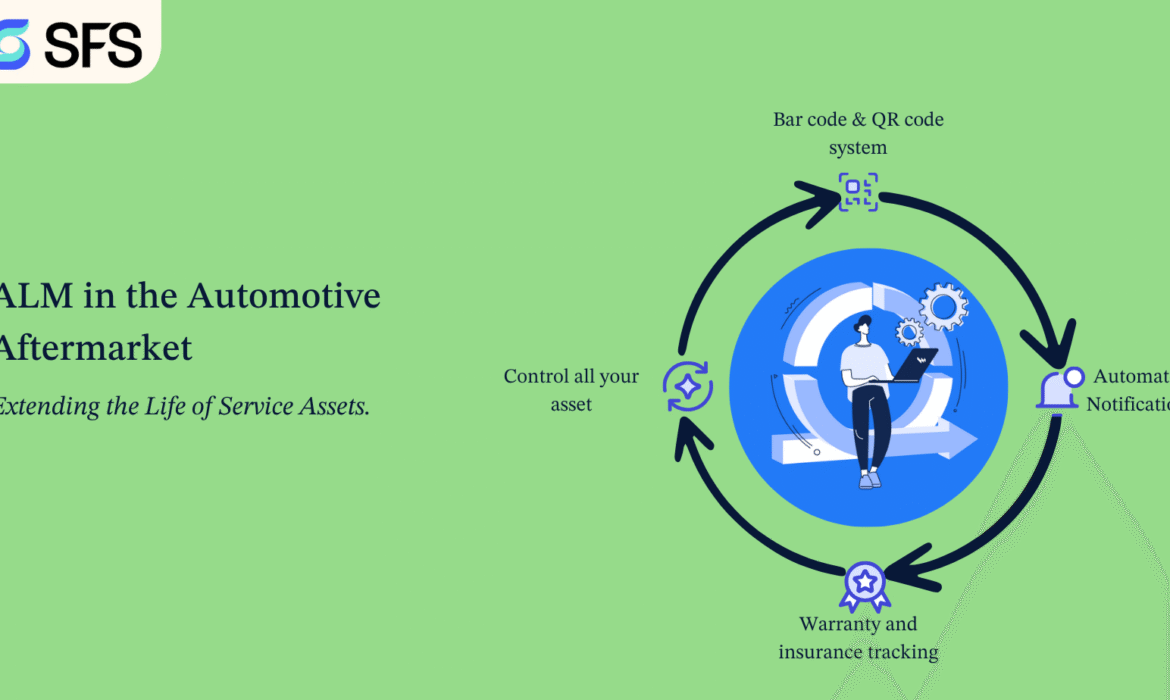
Asset Lifecycle Management (ALM) in the Automotive Aftermarket: Extending the Life of Service Assets.
Introduction: Companies across many industries depend heavily on a variety of resources to operate efficiently and maintain their competitiveness in today’s dynamic business climate. Asset lifecycle management (ALM) approaches are used by organisations to ensure optimal performance, cost effectiveness, and compliance. The influence of ALM on the automotive aftermarket will be covered in this blog article, along with how maintenance expenses can be lowered by up to 33% and downtime can be decreased by up to 23%.
What Is Asset Lifecycle Management (ALM)?
ALM is a strategic approach to managing physical assets throughout their lifecycle – from acquisition and operation to maintenance and disposal. And emphasizes maximizing value, optimizing performance, and minimizing total cost of ownership.
The Automotive Aftermarket’s Use of ALM:
The automotive aftermarket involves parts, equipment, and services purchased after the original sale of a vehicle. ALM applies to:
- Service equipment: Diagnostic tools, lifts, compressors, etc.
- Service facilities: Workshops, service bays, mobile units.
- Technician tools: Scanners, torque wrenches, etc.
Highlight challenges:
- Equipment aging
- Cost of downtime
- Pressure to deliver quick, high-quality service
- Safety and compliance
ALM Extends Asset Life:
- Predictive Maintenance: ALM helps us use data analytics, IoT, and sensors to predict failures. Reduces unplanned downtime and increases useful life.
- Scheduled Servicing and Inspections: ALM allows us to do proactive, routine checks that guarantee efficiency and compliance.
- Digital Twin & Smart Asset Management: With the help of ALM, we can create digital replicas of key assets for simulation and planning, thereby enhancing long-term decision-making.
- Data-Driven Decision Making: We can leverage usage data generated by ALM software to determine repair vs. replacement. We can then begin TCO analysis to guide investments.
Case study on how organizations benefit from Smart ALM software for Automotive Aftermarket.
An automotive company with auto repair and diagnostic centers in over 85 locations across India. The company provides services to both consumer and fleet customers, ranging from routine maintenance to advanced diagnostics and repairs.
With smart asset lifecycle management software: The business was able to see how its assets were being used. They were able to monitor idle time, utilisation rates and asset performance using real-time data from IoT sensors integrated into the apparatus.
Outcome: The company reduced downtime by 23% and maintenance costs by 33%, Asset utilization rate 60%, as proactive maintenance allowed them to address potential issues before they led to failures. This improved delivery efficiency, reduced operational disruptions and enhanced customer satisfaction.
How ALM helps optimize the lifecycle of aftermarket parts and tools in automotive services.
Control all your asset over the entire lifecycle:
- ALM systems provide a single source of truth for tracking all parts, tools, and equipment.
- Each asset (e.g., diagnostic scanner, torque wrench, brake lathe) is tagged and monitored throughout its lifecycle.
- Real-time data helps service managers locate tools quickly and verify their availability and condition.
Predictive and Preventive Maintenance:
- ALM platforms use usage data and condition monitoring (often via IoT sensors) to forecast wear and tear.
- Instead of waiting for tools to fail, the system schedules maintenance based on actual use (e.g., number of cycles, vibration levels).
- Extends the life of tools and avoids costly emergency downtime.
Bar code & QR code system:
- With barcode or QR code scanning capabilities, it becomes easy to scan assets and retrieve up-to-date information, reducing the need for manual record-keeping and minimizing errors.
- Smart ALM uses a barcode and QR code system to identify assets and access their full maintenance, warranty, and repair history.
Lifecycle Cost Management:
- ALM systems track total cost of ownership (TCO), including purchase cost, maintenance, repairs, and downtime.
- Helps determine the right time to repair, refurbish, or replace tools or parts.
- Prevents over-investment in aging or inefficient equipment.
Regulatory Compliance and Safety:
- ALM automates tracking of inspection dates, safety checks, and compliance documentation (e.g., OSHA, EPA).
- Alerts managers before tools go out of spec or become non-compliant.
- Reduces liability and enhances workshop safety standards.
Conclusion: Smart ALM transforms how automotive service centre’s manage aftermarket parts and tools—from manual tracking and reactive maintenance to intelligent lifecycle optimization. It delivers measurable gains in efficiency, cost savings, reliability, and compliance, all of which are critical to remaining competitive in the modern automotive aftermarket.
End with a clear next step: Are you ready to upgrade your Asset Lifecycle Management processes and take your business to new heights? Contact Smart Factory Solutions today and learn how we can be tailored to meet your specific needs. Our team is eager to provide personalized recommendations and demonstrate how our solutions can move your business forward. Contact us now and take the first step toward achieving exceptional quality and customer satisfaction.


