
Introduction: Rapid technological developments have occurred in the automotive industry, and modern cars now have complex mechanical, software, and electronic systems. This complexity also applies to manufacturing assets, where production procedures necessitate smooth interdisciplinary collaboration. From design and development to production and maintenance, Smart Asset Lifecycle Management (ALM) is essential to the effective management of these resources.
In this blog, we will discuss how to manage the complexity of manufacturing assets. This should include the essential features and how a comprehensive solution like Smart Asset Lifecycle Management (Smart ALM) should be in the automotive sector.
ALM in Addressing and Managing Manufacturing Complexity: Interconnected systems used in modern car manufacturing necessitate real-time coordination. To manage this complexity, ALM offers the following advantages:
- Manufacturers may monitor changes, record compliance, and guarantee adherence to industry standards like ISO 26262 for functional safety and IATF 16949 for quality management with the use of ALM tools.
- Design, engineering, and production teams can work together efficiently with ALM, guaranteeing smooth integration of software and mechanical components.
Manufacturers can model production scenarios, streamline processes, and anticipate possible problems by leveraging digital twins and predictive analytics in ALM.
- Assets used in production must change as vehicle designs do. To reduce interruptions and guarantee production consistency, ALM offers organised change management.
- ALM assists in identifying wear and tear, planning preventive maintenance, and minimizing unplanned downtimes with real-time monitoring and AI-driven diagnostics.
Knowing Smart ALM in the Automobile Sector: In the automotive industry, smart asset lifecycle management, or SALM, is the intelligent tracking, monitoring, and optimisation of vehicle and component lifecycles using digital technologies, including cloud computing, blockchain, IoT, and artificial intelligence. This method improves production, operation, maintenance, and disposal sustainability while increasing efficiency and cutting costs.
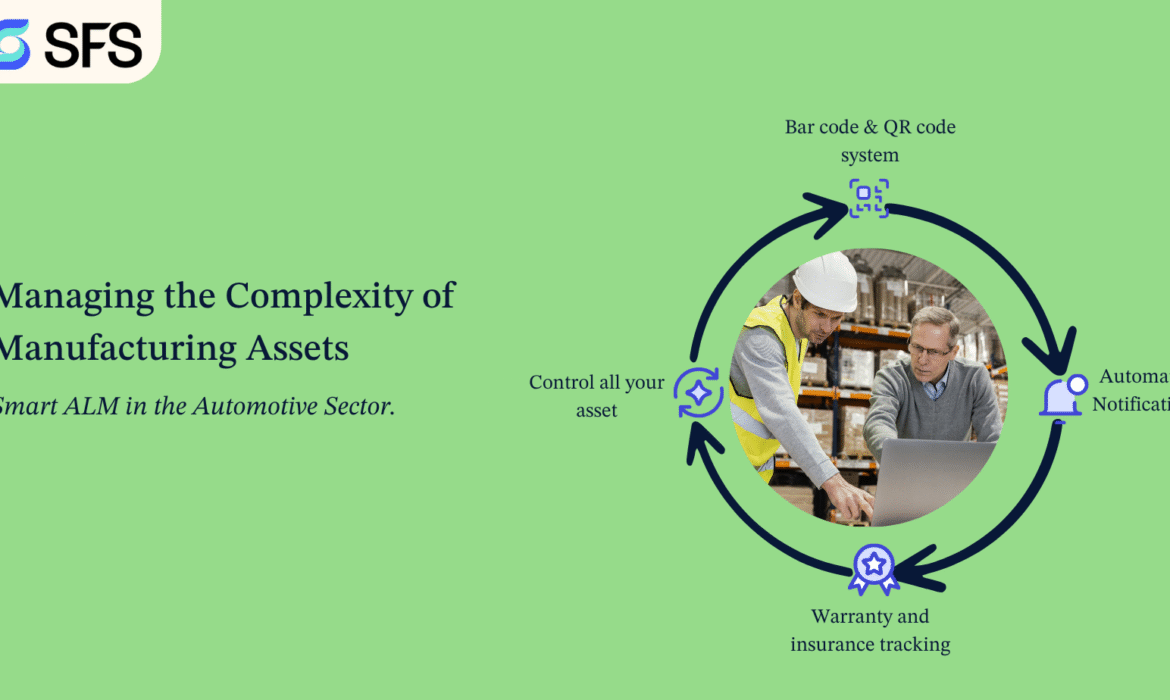
Features of Smart Asset Lifecycle Management: All your IT assets, such as computers, software, machinery, and other items, are simple to manage and control. Oversee depreciation, usage, insurance, warranties, renewals, and other matters.
- Bar Code & QR Code System: It is simple to scan assets and obtain current information when barcode or QR code scanning capabilities are available, which minimizes errors and eliminates the need for human record-keeping.
- Control all your assets over the entire lifecycle: From purchase to disposal, complete control over assets is guaranteed via asset lifecycle management or ALM. To optimise efficiency and value, it includes planning, deployment, maintenance, and retirement. Costs are decreased, performance is enhanced, and asset lifespan is increased with proper tracking and optimisation. Return on investment, security, and compliance are all improved by a strategic ALM approach.
- Lifecycle Management: It is essential to manage an asset’s lifecycle, from purchase until disposal. Every asset’s complete history, including acquisition, deployment, use, maintenance, and final decommissioning or destruction, should be tracked by effective software. Businesses can save time and money by making smarter decisions about when to upgrade or replace assets thanks to this level of insight.
- Warranty and Insurance Management: It may be quite difficult, particularly for large businesses, to keep track of the insurance coverage and warranty expiration dates for every item. By keeping track of warranty and insurance information, asset management software streamlines this procedure and guarantees that you never miss a coverage or renewal deadline. In addition to saving time, this reduces risks and improves claim management.
- Custom Notifications and Reporting: Asset management software should offer customisable reports and notifications, as every organisation has different needs. Customisable alerts make sure you remain proactive by alerting you to impending maintenance, insurance renewals or performance problems. Furthermore, comprehensive reporting features provide information that can direct asset optimisation and decision-making.
- Ticketing and Issue Management: For operations to run smoothly, handling asset-related problems like maintenance tickets or repair requests is essential. Users can effectively log and track issues with asset management software that has integrated ticketing and issue management systems, guaranteeing prompt fixes and less downtime.
How ALM solutions can handle the diverse range of machinery and assets in automotive manufacturing.
Because they provide an organised, integrated method of managing software, hardware, and operating procedures, Application Lifecycle Management (ALM) solutions are essential for managing the wide variety of equipment and assets used in the automotive manufacturing industry. The intricacy of automotive manufacturing is addressed by ALM solutions in the following ways:
- All equipment, tools, and software assets may be tracked centrally with ALM systems.
- Guarantees documentation and version control for each piece of hardware and software component.
- Supports multiple programming languages, frameworks, and protocols used on different machines.
- Firmware management, hardware dependencies, and software upgrades are all smoothly integrated by ALM.
- Oversees the complete lifetime of software-driven tools, assembly lines, CNC machines, and robotic arms.
- Guarantees that production procedures and automobile parts meet legal criteria.
- Gathers information from Industrial Internet of Things (IoT) devices to predict possible malfunctions.
- Allows engineering, production, and IT teams to collaborate in real time.
- Guarantees documentation and version control for each piece of hardware and software component.
- Before making changes, it offers impact analysis, audit trail, and version control.
Conclusion: The importance of Smart ALM in managing manufacturing assets is growing as the automobile industry continues to embrace digital transformation. Automobile manufacturers may increase productivity, boost product quality, and adjust to changing market needs by putting strong ALM strategies into practice. Long-term success in the cutthroat automotive industry is ensured by the integration of Smart ALM with cutting-edge technologies like AI and IoT, which further enhances the capacity to handle complexity.
End with a clear next step: Are you ready to upgrade your ALM management processes and take your business to new heights? Contact Smart Factory Solutions today and learn how we can be tailored to meet your specific needs. Our team is eager to provide personalized recommendations and demonstrate how our solutions can move your business forward. Contact us now and take the first step toward achieving exceptional quality and customer satisfaction.


