
In the manufacturing industry, maximizing asset lifecycle management is essential for cutting expenses, increasing productivity, and prolonging the useful life of assets including tools, machinery, and equipment. By ensuring that assets are appropriately maintained, improved, and replaced as necessary, effective management reduces unplanned maintenance and downtime.
- Put Predictive Maintenance into Practice: Real-time monitoring of machine health, performance, and environmental conditions is made possible by the integration of Internet of Things (IoT) devices and sensors on assets. Reactive maintenance can be replaced with a more proactive and economical predictive model by using this data to forecast when a machine is likely to break down or need maintenance.
- Optimize asset utilization: To make sure that equipment is being used effectively, employ asset management software to monitor each asset’s usage. The company may guarantee that the equipment lasts its whole productive life and reduce the cost of capital investments by routinely evaluating the health of its assets and making the best use of them.
- Centralized management of asset data: Put in place a centralized system to store all pertinent assets. Examine the collected asset data to learn more about maintenance patterns, expenses, and asset performance. Utilize this data to plan future asset purchases or retirements, priorities of investments, and optimize the lifecycle.
- Regular training and skill upgradation: Make sure personnel are adequately trained to utilize asset management systems. Staff members with the right training can better spot new problems with assets and streamline their operations. New technologies like artificial intelligence (AI), augmented reality (AR), and drones are emerging as the manufacturing sector develops and can help with asset management. Workers will be able to utilize these tools to their full potential if they invest in ongoing learning.
- Situational Monitoring: Utilize sensors and remote monitoring tools to track asset health in real-time. Condition-based monitoring provides visibility into asset performance, allowing for immediate intervention if certain thresholds are exceeded.
- Costing and Financial Analysis: Assess assets according to their total cost of ownership (TCO), which considers downtime, operating expenses, maintenance expenses, and the initial expenditure. This facilitates improved asset management decision-making by offering a thorough understanding of each asset’s financial impact.
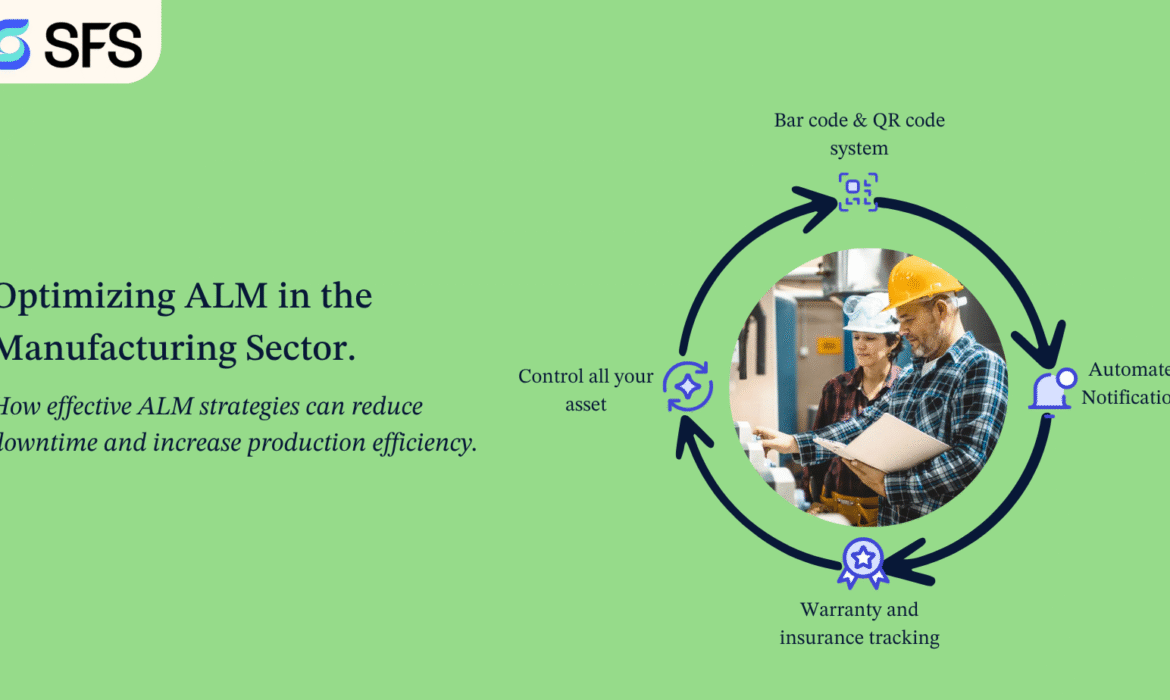
How effective ALM strategies can reduce downtime and increase production efficiency.
Strategies for Asset Lifecycle Management (ALM) are essential for decreasing downtime and boosting production efficiency, particularly in sectors that depend on intricate infrastructure, machinery, and equipment. From asset purchase through operation, maintenance, and decommissioning, asset lifecycle management (ALM) is the key focus. The following are some ways that efficient ALM techniques might result in less downtime and more productive output:
Active Asset Management: ALM enables prompt response through ongoing asset health, performance, and wear monitoring. It assists in setting maintenance and replacement priorities for the most important assets. Proactive management finds possible issues early and fixes them before they become disastrous failures. This minimizes downtime and cuts down on emergency repairs.
Data-Driven Decision Making: Accurate data enables businesses to plan maintenance for the most convenient periods and take care of failing equipment before they affect output. By removing waste and bottlenecks and optimizing asset usage, data-driven decisions assist businesses in increasing overall production efficiency.
Asset Lifetime: By ensuring that assets are maintained in accordance with best practices, ALM methods maximize their longevity and postpone the need for expensive replacements. Assets that receive regular maintenance run more smoothly, using less energy, producing more, and experiencing fewer expensive breakdowns.
Comprehensive Maintenance Plan: To minimize production disturbance, effective ALM guarantees that maintenance schedules are meticulously planned and carried out. Because they eliminate the need for unscheduled maintenance, well-planned maintenance schedules provide predictable and minimal downtime for repairs.
Inventory Optimization: By keeping track of equipment inventories and spare parts, ALM makes sure that the required parts are on hand when needed. To avoid delays in repairs or replacements, it interfaces with supply chain systems. Downtime is decreased when the appropriate parts are available when needed, cutting down on waiting times.
Compliance: Regulatory compliance reduces the risk of disruptions caused by legal or safety issues, ensuring uninterrupted production. Maintaining compliance and reducing hazards improves overall efficiency and prevents needless disruptions by reducing shutdowns and safety-related problems.
The role of reductive in extending asset life in a manufacturing environment.
The role of reductive maintenance (often referred to as preventive maintenance or condition-based maintenance) in extending asset life in a manufacturing environment can be outlined in the following key points:
- Reductive maintenance involves regularly inspecting and monitoring the condition of assets to identify signs of wear and tear. Early identification of potential issues prevents excessive wear, allowing for timely repairs or replacements, extending the life of assets.
- Reductive maintenance reduces the likelihood of catastrophic failures by solving minor problems before they become serious. By preventing serious breakdowns, the asset’s lifetime can be shortened, reducing the likelihood of irreversible damage.
- Assets that are well-maintained have less stress and wear and tear, which extends their lifespan and improves their overall functionality.
- Energy consumption and operational inefficiencies are decreased by well-maintained equipment. Effective operation lengthens the equipment’s lifespan, lessens the strain on machinery, and lowers the possibility of overuse.
- Equipment reliability is increased through routine inspections and planned repairs, which reduce unscheduled downtime. Assets that are consistently dependable endure longer operating lives because they are subject to less stressors and disturbances.
- Early detection and correction of underperformance problems stops additional deterioration and supports the equipment’s long-term health.
- Decreased dependence on urgent fixes aids in preventing the kind of damage that can reduce an asset’s lifespan.
- Maintaining the availability & production readiness of assets is facilitated by routine maintenance. Better utilization and less idle time result from increased availability, and consistent, regular use under ideal circumstances extends asset life.
- Preventing the failure of critical parts ensures that equipment continues operating without long interruptions, which could otherwise accelerate deterioration.
- Employees with proper training are better able to manage equipment ethically, minimizing abuse and prolonging asset life.
Leveraging ALM to improve factory performance and reduce operational costs.
The following crucial elements are included in using Asset Lifecycle Management (ALM) to increase industrial productivity and reduce operating costs:
- Throughout an asset’s lifecycle, monitor and control its performance to guarantee optimal effectiveness and avoid underutilization.
- Reduce unplanned downtime and maintenance expenses by using data to forecast when assets may fail.
- ALM reduces unnecessary spending by enhancing the timing of asset replacement, upgrades, and repairs.
- Find underperforming assets and make effective reallocations to maximize the use of both people and material resources.
- Regular monitoring and maintenance improve asset longevity, delaying the need for costly replacements.
- ALM solutions offer comprehensive insights into asset performance, facilitating data-driven choices that lower expenses and boost productivity.
- Ensure assets comply with industry standards and safety regulations, reducing the risk of costly fines and accidents.
- Lower energy expenses result from monitoring factory asset energy consumption and cutting waste.
- Reduce surplus stock and related expenses while optimizing spare component inventory to guarantee availability.
- Processes are streamlined when ALM is combined with automation tools, increasing industrial output while lowering the expense of manual intervention.
Conclusion: In the manufacturing industry, optimizing asset lifecycle management necessitates a blend of data-driven tactics, sophisticated technologies, and knowledgeable staff. Manufacturers can attain long-term asset value, cost effectiveness, and operational excellence by emphasizing sustainability, predictive maintenance, and system integration.
End with a clear next step: Are you ready to upgrade your ALM (Asset Lifecycle Management) processes and take your business to new heights? Contact Smart Factory Solutions today and learn how we can tailor it to meet your specific needs. Our team is eager to provide personalized recommendations and demonstrate how our solutions can move your business forward. Contact us now and take the first step toward achieving exceptional quality and customer satisfaction.


