
Introduction: Effective procurement procedures are essential for preserving cost control, guaranteeing quality and cultivating solid supplier relationships in the cutthroat business environment of today. Request for Quote (RFQ) software is one effective technique that can greatly improve your procurement approach. We’ll go over what RFQ software is, its main benefit and how automation tools can speed up RFQ creation, distribution and evaluation in this blog post.
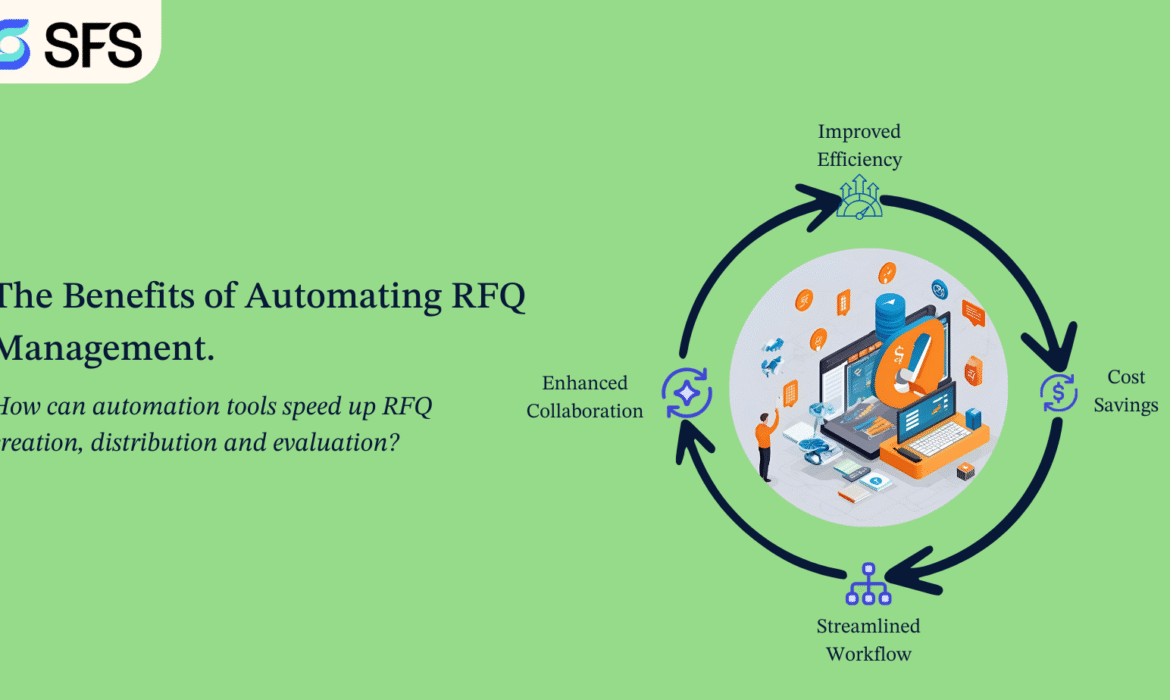
The Benefits of Automating RFQ Management: RFQ management has historically been a manual procedure that is frequently prone to mistakes, inefficiencies and communication snags. Automating RFQ management presents several benefits that can significantly enhance procurement operations.
- Improved Efficiency: By doing away with human processes like data input, document processing and communication tracking, automation expedites the RFQ process. The time needed to gather and compare quotations can be greatly decreased by using automated systems that can create and submit Smart RFQs to several vendors at once.
- Enhanced Collaboration: Improved supplier relationship management and communication are made possible by automated Smart RFQ platforms. Digital bids, submission tracking and real-time updates are all available to suppliers. This promotes openness and improves cooperation between vendors and procurement teams.
- Better accuracy and fewer errors: Errors in data entry, pricing computations and supplier responses are frequently the result of manual RFQ administration. By standardising formats, guaranteeing consistency in data capture and automatically identifying inconsistencies or missing information, automation reduces these risks.
- Cost Savings: Automation lowers RFQ management expenses by decreasing manual labour, operational inefficiencies and errors. Furthermore, procurement teams can make better financial judgements by swiftly identifying the most affordable supplier possibilities thanks to computerised comparison tools.
- Data-Driven Decisions: Procurement teams can get useful information and insights with automated RFQ solutions. These technologies facilitate improved forecasting, strategic sourcing and well-informed decision-making by tracking supplier performance, pricing trends and historical data.
- Enhanced Security and Data Protection: Secure platforms for handling private procurement data are offered by automated systems. Businesses can protect their procurement procedures from data breaches and unwanted access by using features like encrypted communications, role-based access control and secure storage.
Case studies on how organizations benefit from automating RFQ software?
It was difficult to swiftly create precise cost models for a business with a variety of manufacturing processes. The business reduced variability and ensured consistent, accurate cost models by automating their quoting process with RFQ cost modelling software. They were able to provide bids faster thanks to this automation, which improved client satisfaction and operational effectiveness.
Outcomes: Manual processes, errors and delayed responses cost you time and money. Smart RFQ is the solution!
- 48% Faster RFQ Processing – Automate workflows and eliminate delays.
- 77% Accuracy – Reduce human errors with a centralized digital system.
- 32% Cost Savings – Optimize supplier selection and price negotiations.
- Real-time Collaboration – Connect with suppliers seamlessly for quick decision-making.
How can automation tools speed up RFQ creation, distribution and evaluation?
Automation tools can significantly speed up the Request for Quotation (RFQ) process by streamlining creation, distribution and evaluation. Here’s how:
- RFQ Creation: Pre-configured templates can be used by automation tools to generate RFQs, saving manual labour and guaranteeing consistency. AI can reduce errors and save time by automatically filling in fields based on previous RFQs. Additionally, tools can remove duplication of effort by immediately pulling pertinent data (such as item specs, quantities, and supplier history) from corporate system.
- RFQ Distribution: To cut down on manual follow-ups, RFQs can be automatically distributed to numerous suppliers via email or supplier portals. Supplier answers are guaranteed on time thanks to automated follow-up emails and deadline reminders. Based on availability, pricing patterns and historical performance, this system can suggest or automatically choose vendors.
- RFQ Evaluation: Based on factors including pricing, delivery time, quality ratings and historical performance, this application may automatically compare provider responses. Additionally, AI can rate offers according to weighted criteria, assisting procurement teams in making data-driven decisions more quickly. Additionally, a centralised platform allows stakeholders to examine and approve proposals, eliminating the back-and-forth email delays. Automation keeps a digital log of every RFQ activity, ensuring compliance.
Conclusion: Procurement operations are transformed by automating RFQ management, which increases cost-effectiveness, accuracy and efficiency. By improving supplier relationships, guaranteeing compliance and making data-driven procurement decisions, companies that implement automated solutions obtain a competitive advantage. Procurement teams should think about automating RFQ management as a strategic step to improve productivity and propel business performance as digital revolution continues to disrupt industries.
End with a clear next step: Are you ready to upgrade your RFQ Management processes and take your business to new heights? Contact Smart Factory Solutions today and learn how we can be tailored to meet your specific needs. Our team is eager to provide personalized recommendations and demonstrate how our solutions can move your business forward. Contact us now and take the first step toward achieving exceptional quality and customer satisfaction.


