
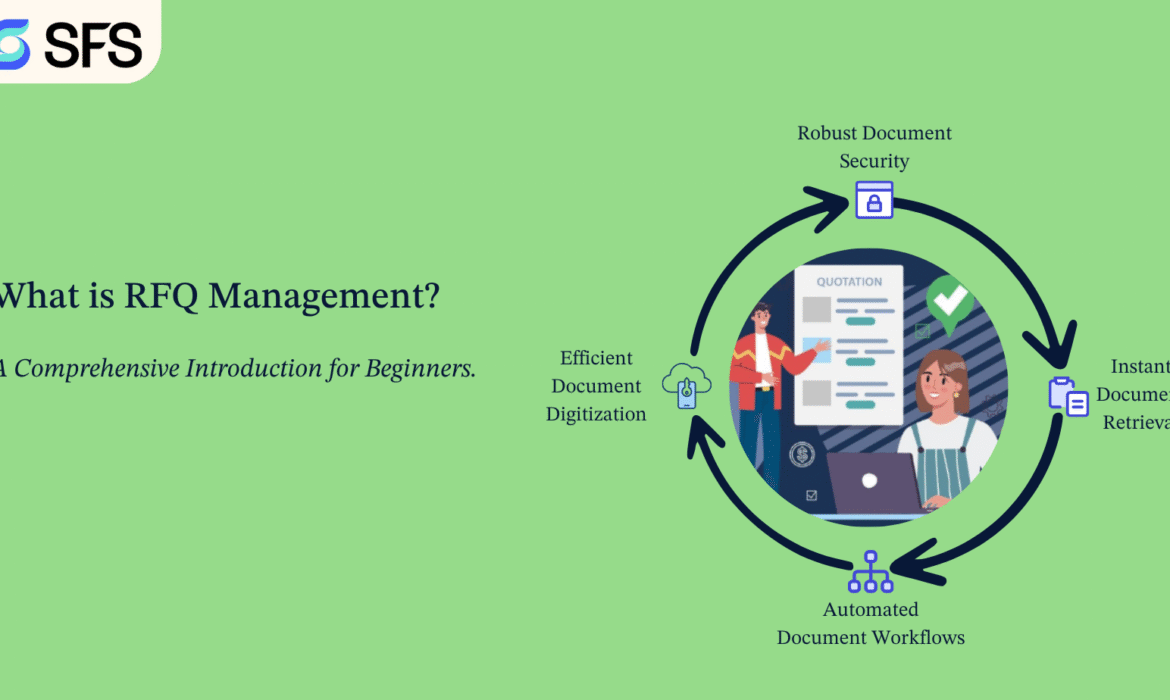
What is RFQ:
A formal document known as an RFQ (Request for Quotation) is sent by a buyer to several suppliers to request conditions and prices for goods or services. Usually, it contains comprehensive details about the things required, including quantity, specs, and delivery requirements. When suppliers reply with quotes, the buyer reviews them to determine which is the best deal. In businesses where goods or services are standardised, RFQs are frequently utilised since they facilitate direct quotation comparison.
What is RFQ Management:
The process of planning, sending, receiving and evaluating RFQs to guarantee effective procurement is known as RFQ management. There are multiple important processes involved:
- Clearly defining the products or services needed.
- Preparation of RFQ document, including specifications, quantities, deadlines and terms.
- Selecting the vendors to whom the RFQ should be sent, considering criteria such as prior performance and dependability.
- Sending the document to suppliers, usually via email or procurement software.
- Reviewing the responses from suppliers and comparing prices, terms and conditions.
- Choosing the supplier that offers the best value, considering cost, quality and delivery terms.
An overview of RFQ management and its importance in the procurement process.
Overview of RFQ management:
When requesting quotes from suppliers or contractors for goods or services with standardised specifications or those that are manufactured in large quantities, a competitive bid document known as an RFQ is utilised. An effective RFQ document includes the following elements:
- Product/Service Description: Specifications of the required item in detail.
- Quantity: The number of units required
- Delivery Schedule: Anticipated delivery schedules and dates.
- Terms and Conditions: Conditions, warranty information and terms of payment.
- Submission Deadline: A clear deadline for suppliers to submit their quotes.
Importance in the procurement process:
RFQ management offers several importance to organizations:
- Businesses can select the most competitive cost by comparing several bids.
- Streamlined processes reduce the time spent on procurement.
- Guarantees equitable competition and transparent record-keeping of procurement choices.
- Helps identify reliable suppliers and build long-term partnerships.
- Lowers the chance of supplier problems and guarantees adherence to procurement regulations.
How Smart RFQ management helps streamline the process of acquiring goods or services.
By offering a methodical and effective approach to vendor selection and procurement, Request for Quotation (RFQ) management is essential to speeding up obtaining products or services. This is how it’s beneficial:
- Communication in One Place: All correspondence with possible suppliers is centralised and standardised thanks to Smart RFQ management. This makes it easier to compare responses, guarantees that all vendors receive the same information and lowers the possibility of misunderstandings.
- Time Efficiency: Automating repetitive operations like creating RFQs, submitting them to suppliers and monitoring responses is possible with RFQ management tools or systems. This guarantees prompt decision-making, expedites the procurement cycle and decreases manual labour.
- Enhanced Vendor Comparison: An RFQ standardizes the format in which vendors submit their proposals, making it easier to compare costs, timelines and terms. This allows procurement teams to make data-driven decisions based on consistent and comparable metrics.
- Cost Savings: By soliciting quotes from multiple suppliers, RFQ management promotes competition among vendors, often leading to more competitive pricing. Additionally, clear specifications minimize the likelihood of costly misunderstandings or errors.
- Enhanced Adherence: Features that guarantee adherence to both internal and external regulations are frequently included in RFQ management systems. This lowers the possibility of legal problems and guarantees that procurement is in line with corporate objectives.
- Transparency: A transparent audit trail is produced by tracking and storing every interaction and document involved in the RFQ process. This improves accountability and transparency, which facilitates decision-making and dispute resolution.
- Customization and Specificity: RFQ management allows buyers to define their exact requirements in detail, such as product specifications, delivery schedules, and service terms. This reduces ambiguity, ensuring suppliers understand and meet the buyer’s needs.
- Supplier Management: An RFQ process helps identify reliable vendors through a structured evaluation process. Over time, this fosters strong supplier relationships, improving quality, reliability, and collaboration.
- Scalability: It gets more and harder to manually manage RFQs as businesses expand. Large amounts of requests, suppliers and responses can be handled using RFQ management platforms or systems, guaranteeing scalability without sacrificing effectiveness.
The key stages of Smart RFQ management: Preparation, Submission, Evaluation and Selection
The four main steps of the RFQ (Request for Quotation) management process are Preparation, Submission, Evaluation and Selection. Below is a summary of every step:
Preparation: This phase establishes the framework for the RFQ procedure. Important actions consist of:
- Give a clear description of the project’s or procurement’s deliverables, specifications and scope.
- Make a thorough RFQ that includes terms, conditions, deadlines and technical details.
- Look into and narrow down the list of suppliers or vendors who can fulfil the requirements.
- Establish objective criteria to assess vendor responses, such as pricing, quality, experience and compliance.
- Provide deadlines and make submission instructions clear.
Submission: The RFQ is sent out at this point and vendors are ready to submit their answers. Among the activities are:
- Make sure the selected vendors receive all pertinent information when you send them the RFQ.
- Provide a platform for vendors to ask questions and receive clarifications.
- Gather answers within the allotted time, making sure they follow the guidelines for submission.
Evaluation: Here, the emphasis is on evaluating and contrasting the answers using predetermined standards. Among the steps are:
- Verify that each submission complies with the RFQ requirements and is complete.
- Compare costs, payment terms and delivery schedules.
- Examine the vendor’s credentials, track record and experience.
- Identify vendors that meet or exceed the evaluation criteria.
Selection: Selecting the best vendor and completing the contract are the last steps. Important actions consist of:
- Clarify and negotiate terms, if necessary, to ensure mutual agreement.
- Send the purchase order or contract to the chosen vendor after notifying them.
- Notify unsuccessful vendors of the decision while preserving openness and goodwill.
- Keep all records in an archive for audits and future use.
Conclusion: An essential component of any company’s buying strategy is RFQ management. Organisations may maximise their purchasing activities, negotiate better prices and forge closer bonds with suppliers by effectively managing the process. Understanding RFQ management can help you guarantee that you receive the greatest value for your money while preserving seamless operations and reducing risks, regardless of whether you run a small business or are a part of a larger organisation.
End with a clear next step: Are you ready to upgrade your RFQ Management processes and take your business to new heights? Contact Smart Factory Solutions today and learn how we can be tailored to meet your specific needs. Our team is eager to provide personalized recommendations and demonstrate how our solutions can move your business forward. Contact us now and take the first step toward achieving exceptional quality and customer satisfaction.


